
How to Tell If You Have Impacted Ear Wax | Symptoms & Treatment
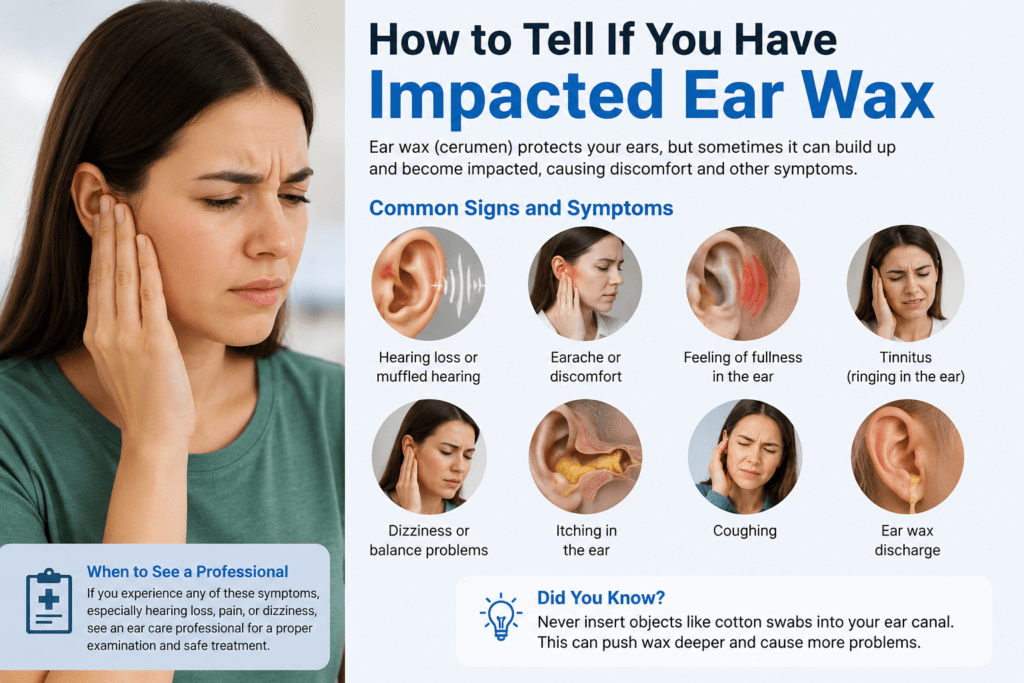
Impact ear wax is one of the most common yet misunderstood causes of blocked ears and temporary hearing loss. Many people experience symptoms such as muffled hearing, ear pressure, or discomfort and assume it is due to an infection or a more serious medical condition. In reality, in a large number of cases, the cause is simply a buildup of ear wax that has become impacted inside the ear canal.
Ear wax, also known medically as cerumen, is completely natural and plays an important role in protecting the ear. However, when too much wax builds up or when it becomes too hard to exit the ear naturally, it can lead to blockage. This condition is known as impacted ear wax, and it can affect hearing, comfort, and overall ear health.
Understanding how to identify impacted ear wax early is important because it allows you to seek treatment before the symptoms worsen. In most cases, impacted wax can be safely and quickly removed through professional treatments such as microsuction, restoring normal hearing almost immediately.
This guide explains in detail how to tell if you have impacted ear wax, what causes it, what symptoms to look out for, and when to seek professional help.
What Is Impacted Ear Wax?
Impact ear wax occurs when natural ear wax builds up in the ear canal and becomes too dense, dry, or compacted to naturally move out of the ear. In a healthy ear, wax slowly migrates outward as part of the ear’s self-cleaning mechanism. However, when this process is disrupted, wax can accumulate and harden.
Once wax becomes impacted, it can block part or all of the ear canal. This prevents sound waves from reaching the eardrum properly and can lead to noticeable hearing difficulties. In some cases, the blockage may develop gradually over time, while in other cases it may happen suddenly, especially after using cotton buds or wearing hearing devices.
Impact ear wax is not dangerous in most cases, but it can significantly affect quality of life if left untreated.
How Ear Wax Normally Works
To understand impacted ear wax, it is important to understand the natural role of ear wax itself. Ear wax is produced by glands located in the outer part of the ear canal. It is made up of oils, dead skin cells, and other natural substances that help protect the ear.
Ear wax has several important functions. It traps dust, dirt, and small particles before they can reach deeper parts of the ear. It also helps prevent bacterial and fungal infections by creating a protective barrier. In addition, ear wax helps keep the skin inside the ear canal moisturized and prevents dryness and irritation.
In most people, ear wax naturally moves outward as the jaw moves during talking or chewing. It eventually falls out or is washed away naturally during bathing. This process usually keeps the ears clean without any need for manual cleaning.
Problems only arise when this natural process is disrupted.
What Causes Ear Wax to Become Impacted?
There are several reasons why ear wax may become impacted. One of the most common causes is the use of cotton buds or other objects inserted into the ear. While many people use cotton buds to clean their ears, they often push wax deeper into the canal rather than removing it. Over time, this leads to compacted wax that becomes difficult to remove naturally.
Another common cause is the use of hearing aids or earphones. These devices can block the natural movement of wax out of the ear, allowing it to build up over time. People who wear hearing aids regularly are particularly prone to wax-related issues.
Some individuals naturally produce more ear wax than others due to genetics. In these cases, the ear may simply produce more wax than it can naturally clear, leading to gradual buildup.
Age can also play a role. As people get older, ear wax often becomes drier and harder, making it more likely to become impacted. Additionally, narrow or curved ear canals can make it more difficult for wax to exit the ear properly.
In some cases, skin conditions affecting the ear canal can also contribute to wax buildup and impaction.
Early Signs of Impacted Ear Wax
One of the earliest and most noticeable signs of impacted ear wax is a change in hearing. Many people describe this as muffled or reduced hearing, as though sounds are being blocked or filtered. This occurs because wax is physically obstructing the passage of sound waves to the eardrum.
Another common early symptom is a feeling of fullness or pressure inside the ear. This sensation can feel similar to having water trapped in the ear after swimming. The feeling may develop gradually or appear suddenly depending on how quickly the wax builds up.
Some people also notice a slight reduction in sound clarity. Conversations may become harder to follow, especially in noisy environments. This is often one of the first signs that prompts people to seek help.
At this stage, many individuals are still unsure whether the issue is wax-related or something more serious, which is why understanding the symptoms is important.
Hearing Changes Caused by Impacted Ear Wax
Hearing loss caused by ear wax is typically temporary and conductive in nature. This means that sound waves are physically blocked from reaching the eardrum rather than there being damage to the inner ear.
People with impacted wax often report that sounds seem distant, unclear, or reduced in volume. In some cases, one ear may be affected more than the other, depending on where the wax has accumulated.
This type of hearing loss can be particularly noticeable during phone calls or conversations in busy environments. Some people may even increase the volume on devices without realising that the issue is caused by wax.
Once the wax is removed, hearing usually returns to normal immediately.
Ear Fullness and Pressure Sensation
A common symptom of impacted ear wax is a persistent feeling of fullness or pressure inside the ear. This sensation is caused by the wax physically occupying space inside the ear canal and pressing against the surrounding structures.
This feeling can sometimes be mistaken for sinus pressure or an ear infection. However, unlike infections, impacted wax usually does not cause severe pain or fever.
The pressure sensation may become more noticeable when chewing, talking, or lying down. In some cases, people may try to relieve the feeling by cleaning the ear, which often worsens the blockage.
Tinnitus and Ringing in the Ears
Tinnitus, or ringing in the ears, can also be a symptom of impacted ear wax. The presence of wax can interfere with normal sound transmission, leading to ringing, buzzing, or humming sounds inside the ear.
This type of tinnitus is usually temporary and resolves once the wax is removed. However, it can be distressing and may affect concentration or sleep.
Not all tinnitus is caused by ear wax, which is why professional assessment is important if symptoms persist.
Itching and Mild Discomfort
Some people experience itching inside the ear when wax builds up. This is often caused by irritation of the ear canal skin due to trapped wax or dryness.
While mild itching is common, persistent scratching or attempting to remove wax can make the condition worse. The ear canal is very sensitive, and excessive cleaning can lead to inflammation or further blockage.
Mild discomfort may also occur, especially if the wax is pressing against the ear canal walls.
Dizziness and Balance Issues
In some cases, impacted ear wax may contribute to mild dizziness or a slight imbalance. This happens because the ear plays an important role in balance and spatial awareness.
When wax interferes with the ear canal, it may affect pressure and sound perception, leading to temporary dizziness in some individuals. However, severe or persistent dizziness should always be medically assessed, as it may indicate other conditions.
Who Is Most at Risk of Impacted Ear Wax?
Certain groups of people are more likely to experience impacted ear wax. Hearing aid users are one of the most affected groups because hearing devices can prevent wax from naturally exiting the ear.
Older adults are also more prone to wax buildup due to changes in ear wax consistency with age. Children may also experience wax blockage, although this is less common.
People who frequently use cotton buds or insert objects into their ears are at higher risk as well. Additionally, individuals with naturally narrow ear canals may experience recurring issues.
Why You Should Avoid Removing It Yourself
Attempting to remove impacted ear wax at home is one of the most common mistakes people make. Cotton buds, pins, or other objects often push wax further into the ear canal, making the blockage worse.
This can also lead to injury, irritation, or even damage to the eardrum in severe cases. Ear candles and other home remedies are also not recommended due to safety concerns.
Because the ear is a delicate structure, it is always safer to seek professional removal when symptoms appear.
How Professionals Diagnose Impacted Ear Wax
A trained clinician can quickly diagnose impacted ear wax through a simple ear examination. Using a light and magnification device, they can clearly see whether wax is blocking the ear canal.
In most cases, diagnosis is immediate and does not require complex testing. Once confirmed, the clinician can recommend appropriate treatment such as microsuction or softening drops.
Microsuction as a Treatment Option
Microsuction is one of the most effective methods for removing impacted ear wax. It uses gentle suction combined with direct visual guidance to safely remove wax from the ear canal.
Because the clinician can see inside the ear during the procedure, microsuction is highly precise and reduces the risk of complications. It is also suitable for people who may not be able to undergo water-based ear syringing.
Most patients experience immediate relief after treatment.
When to Seek Professional Help
You should seek professional ear wax removal if you experience persistent symptoms such as muffled hearing, ear pressure, ringing in the ears, or blocked sensations that do not improve over time.
If symptoms worsen or are accompanied by pain, discharge, or sudden hearing loss, immediate medical assessment is recommended.
Early treatment helps prevent discomfort and restores normal hearing quickly.
Impact ear wax is a common but easily treatable condition that affects many people at some point in their lives. Recognising the early signs such as muffled hearing, ear pressure, and tinnitus can help you seek treatment before the problem worsens.
Although ear wax is a natural and important part of ear health, excessive buildup can lead to blockage and discomfort. The safest and most effective way to deal with impacted ear wax is through professional assessment and treatment, such as microsuction.
If you are experiencing symptoms of blocked ears, seeking help early can restore comfort and hearing quickly while avoiding unnecessary complications.