
When Should You Remove Ear Wax?
Ear wax, also known as cerumen, is a natural substance produced inside the ear canal to help protect the ears from dirt, bacteria, and other harmful particles. Although many people think ear wax should always be removed, it actually plays an important role in maintaining healthy ears. In most cases, the ears clean themselves naturally by slowly moving wax out of the canal over time.
However, there are situations where ear wax can build up excessively and begin causing discomfort or hearing problems. Knowing when ear wax should be removed is important because unnecessary cleaning can sometimes do more harm than good. Professional ear wax removal is generally recommended when symptoms of blockage or impacted wax begin affecting daily life or hearing.
When Ear Wax Becomes a Problem
Not all ear wax needs to be removed. In fact, many people go years without requiring any professional treatment. Ear wax only becomes a concern when it accumulates excessively and blocks the ear canal.
Impacted ear wax occurs when wax becomes trapped deep inside the ear canal and cannot exit naturally. This may happen gradually over time or after repeated use of cotton buds, earphones, or hearing aids. Once wax becomes compacted, it can begin causing noticeable symptoms that interfere with comfort and hearing.
The severity of symptoms can vary from person to person. Some individuals experience only mild discomfort, while others may notice significant hearing reduction or persistent blocked ears.
Signs That You May Need Ear Wax Removal
One of the clearest signs that ear wax may need removal is reduced or muffled hearing. Excess wax can block sound from reaching the eardrum properly, making conversations and everyday sounds harder to hear.
Many people also experience a sensation of fullness or pressure inside the ear. Some describe it as feeling like water is trapped in the ear canal. This blocked sensation may affect one or both ears depending on where the wax has accumulated.
Earache or discomfort can also develop when wax presses against the ear canal or eardrum. In some cases, impacted wax may cause itching, dizziness, or ringing in the ears, commonly known as tinnitus.
If hearing aids suddenly produce feedback noises or stop functioning correctly, excess ear wax may be interfering with the device. People who wear hearing aids are particularly prone to wax buildup because hearing devices can block the natural movement of wax out of the ear.
Temporary Hearing Loss Caused by Ear Wax
Many people are surprised to learn that ear wax can sometimes cause temporary hearing loss. When the ear canal becomes fully blocked, sound waves cannot travel effectively to the eardrum. This often results in muffled hearing or a noticeable reduction in hearing ability.
Fortunately, hearing typically improves quickly once the impacted wax has been professionally removed. However, it is important not to assume all hearing problems are caused by wax. A professional examination can help determine whether ear wax is the true cause of the symptoms.
Why Some People Need Ear Wax Removal More Often
Certain individuals naturally experience more ear wax buildup than others. This may be due to genetics, narrow ear canals, excessive hair inside the ears, or naturally dry wax that struggles to exit the ear canal.
Hearing aid users often require more frequent ear cleaning because hearing devices can trap wax inside the ear. People who regularly use earphones or earbuds may also experience increased wax accumulation.
Older adults are another group commonly affected by impacted ear wax. As people age, ear wax often becomes harder and drier, making it more difficult for the ears to clean themselves naturally.
Some people may need professional ear wax removal every few months, while others may rarely require treatment at all.
When You Should Avoid Removing Ear Wax Yourself
Many people attempt to remove ear wax at home using cotton buds or other objects. Unfortunately, this often pushes the wax deeper into the ear canal and worsens the blockage.
Cotton buds may create impacted wax that becomes harder to remove naturally. Inserting sharp objects into the ears can also damage the delicate skin inside the ear canal or even injure the eardrum.
Ear candles and certain home remedies are also discouraged because they can cause burns, irritation, or further complications. While some over-the-counter ear drops may help soften wax, they are not always suitable for everyone.
If symptoms persist or worsen, professional assessment is usually the safest option.
How Professionals Remove Ear Wax
Modern ear wax removal methods are much safer and more effective than many home cleaning techniques. One of the most widely recommended treatments today is microsuction ear wax removal.
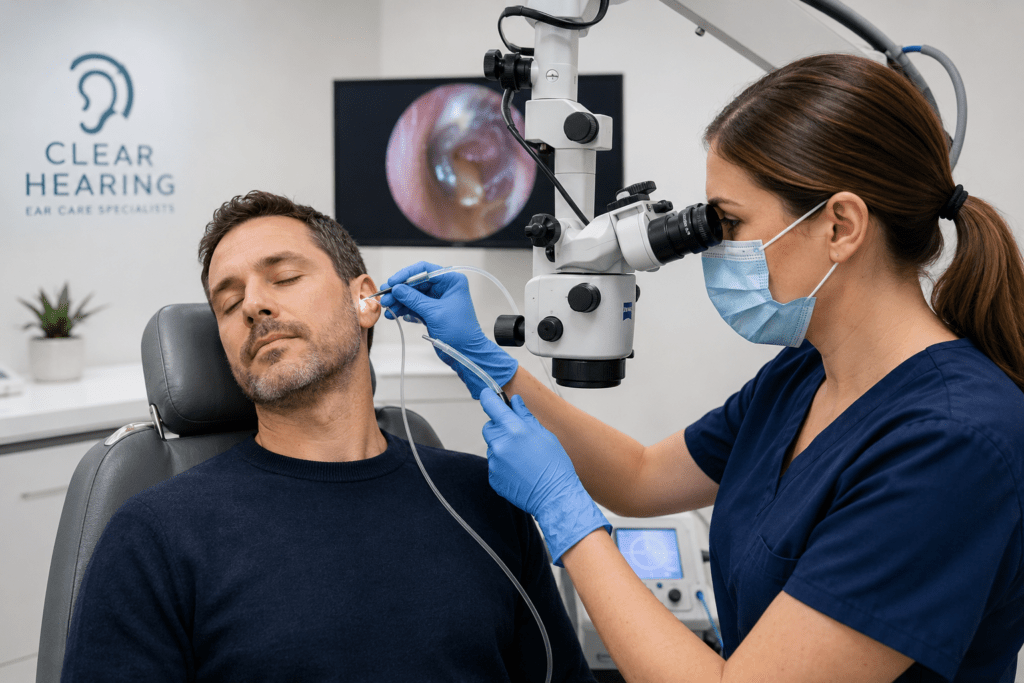
Microsuction uses a gentle medical suction device to carefully remove wax while the clinician views the inside of the ear using magnifying equipment. Because the ear is clearly visible during the procedure, microsuction allows for precise and controlled wax removal.
Unlike traditional ear syringing, microsuction does not involve flushing water into the ear canal. This makes it suitable for many people with sensitive ears, perforated eardrums, or previous ear surgery.
Professional ear wax removal is usually quick and many patients notice immediate improvement in hearing and comfort after treatment.
How Often Should You Remove Ear Wax?
There is no universal schedule for ear wax removal because every person’s ears are different. Some individuals may never require treatment, while others benefit from regular appointments.
People who frequently experience blocked ears or wear hearing aids may choose to have their ears checked every few months. Others may only need occasional treatment when symptoms appear.
It is generally not recommended to remove ear wax too often if there are no symptoms. Ear wax serves a protective purpose, and unnecessary cleaning can irritate the ear canal or disrupt the ear’s natural cleaning process.
The best approach is usually to monitor for symptoms and seek professional advice if hearing changes or discomfort develops.
Symptoms That Require Professional Attention
While ear wax buildup is common, certain symptoms should always be assessed by a healthcare professional. Severe ear pain, discharge from the ear, bleeding, sudden hearing loss, or persistent dizziness may indicate other ear conditions that require medical attention.
Recurring infections, swelling, or ongoing tinnitus should also be professionally evaluated. A trained ear care practitioner can examine the ears and determine whether symptoms are caused by wax or another underlying issue.
Professional assessment is especially important for individuals with previous ear surgery, perforated eardrums, or chronic ear conditions.
Preventing Excessive Ear Wax Build-Up
Although ear wax cannot always be prevented, there are ways to reduce the risk of severe buildup. Avoiding cotton buds is one of the most important steps because they commonly push wax deeper into the ear canal.
People who regularly wear hearing aids or earbuds may benefit from routine ear checks to monitor wax accumulation. Some individuals also use olive oil ear drops occasionally to soften wax naturally, although this should only be done according to professional guidance.
Maintaining healthy ears involves allowing the ears to clean themselves naturally whenever possible and avoiding unnecessary cleaning practices.
Final Thoughts
Ear wax is a normal and healthy part of the ear’s natural defence system, but excessive buildup can sometimes lead to discomfort, blocked ears, and temporary hearing problems. Knowing when ear wax should be removed can help prevent complications and protect long-term ear health.
If you notice symptoms such as muffled hearing, ear pressure, tinnitus, or persistent blocked ears, professional ear wax removal may be beneficial. Safe treatments such as microsuction allow clinicians to remove impacted wax carefully and effectively while minimizing discomfort.
Rather than attempting risky home cleaning methods, seeking professional advice is often the safest and most effective way to maintain healthy hearing and comfortable ears.