
Why Does My Voice Sound Strange With Hearing Aids?
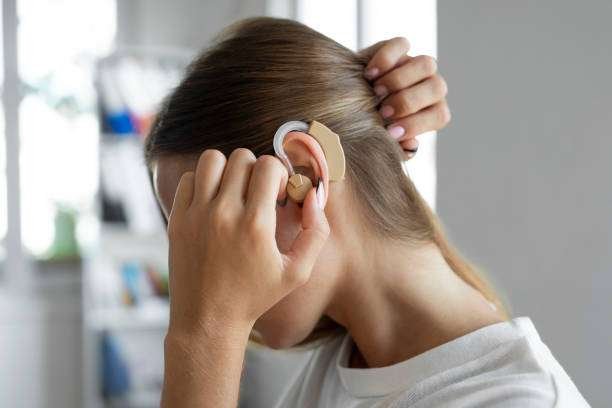
One of the first things many people notice after getting hearing aids is that their own voice sounds different.
You may feel as though your voice is louder than usual, echoing, blocked, hollow, booming or even slightly robotic. For some people, this is one of the strangest parts of getting used to hearing aids.
So why do hearing aids make your voice sound strange?
In many cases, the change happens because hearing aids alter the way sound reaches your ears. Your hearing may also have changed gradually over time, meaning your brain has become accustomed to hearing your own voice in a particular way.
When amplification is introduced, your brain suddenly receives a different version of your voice.
The good news is that this experience is often temporary and becomes less noticeable as you adjust. However, persistent or severe changes in the sound of your voice can sometimes indicate that your hearing aids need adjustment.
Why Does My Voice Sound Different With Hearing Aids?
Your voice reaches your ears in two main ways.
Some of the sound travels through the air around you. Another part of the sound reaches your inner ear through vibrations travelling through your head and skull.
When you speak, you therefore hear your own voice differently from how another person hears it.
Hearing aids can change this balance.
The device may amplify some of the sound reaching your ear, while the physical presence of the hearing aid or earmould can alter how naturally sound enters and leaves the ear canal.
This can make your voice seem unfamiliar.
What Does Your Voice Sound Like With Hearing Aids?
Everyone experiences the change differently.
You might describe your voice as:
Louder
Boomy
Hollow
Blocked
Echoing
Muffled
Robotic
Metallic
Deep
Nasal
Too close
The sensation may be particularly noticeable when you are speaking.
Some people notice it immediately when their hearing aids are fitted. Others only become aware of it after talking for several minutes.
What Is the Occlusion Effect?
One common reason for a strange sounding voice is called the occlusion effect.
Occlusion happens when the ear canal is partly blocked.
When you speak, vibrations from your own voice travel through your head and reach the tissues around your ear. If the ear canal is open, some of this sound can escape naturally.
If the ear canal is blocked by an earmould, hearing aid or another object, more of those vibrations can remain inside the ear canal.
This can make your voice sound louder or more resonant.
It is similar to the experience of speaking while wearing your fingers over your ears.
Your voice suddenly sounds much more prominent.
Why Does My Voice Sound Boomy With Hearing Aids?
A booming voice is often associated with the occlusion effect.
You may feel as though your voice is trapped inside your head.
This can be particularly noticeable with certain types of hearing aid fittings that sit more deeply or create a tighter seal in the ear canal.
For some people, the sensation becomes less noticeable as they get used to the hearing aids.
For others, the physical fit may need adjusting.
Why Does My Voice Sound Loud When I Speak?
Hearing aids can amplify parts of your own voice.
If you have hearing loss, you may have become accustomed to hearing your voice at a particular level.
When amplification is introduced, your voice may suddenly become more prominent.
Your brain needs time to adapt to this change.
In some cases, however, excessive amplification or an unsuitable fitting can make the problem more noticeable.
This is why follow up appointments are important.
Is It Normal for Your Voice to Sound Strange With New Hearing Aids?
Yes, it can be normal.
Many people notice a change in their own voice when they first start wearing hearing aids.
The brain needs time to adapt to the new sound.
The experience may become less noticeable after several days or weeks of regular use.
However, you should not feel that you have to tolerate severe discomfort indefinitely.
If your voice continues to sound extremely loud, distorted or unpleasant, contact your hearing professional.
How Long Does It Take to Get Used to Your Voice With Hearing Aids?
There is no exact adjustment period.
Some people become accustomed to the change quite quickly.
Others need several weeks.
The adjustment may depend on:
How long you have had hearing loss
The degree of your hearing loss
The type of hearing aid
The style of fitting
How much of the ear canal is occupied
How frequently you wear your hearing aids
Your individual hearing needs
Consistent use can help your brain become familiar with the new sound.
Should My Voice Eventually Sound Normal?
For many people, the difference becomes much less noticeable.
The goal is not necessarily for your voice to sound exactly as it did before you developed hearing loss.
Instead, the aim is for your hearing aids to provide comfortable amplification without making your own voice distracting or unpleasant.
If your voice continues to sound significantly abnormal, your hearing professional may be able to improve the experience through adjustments to the hearing aid or physical fitting.
Can Hearing Aid Settings Make My Voice Sound Strange?
Yes.
Programming can affect how your own voice sounds.
If certain frequencies are amplified more strongly, your own voice may become more prominent.
Your hearing professional can adjust the programming based on your hearing test and your real-world experiences.
This is one reason it is useful to describe exactly what you are hearing rather than simply saying that the hearing aids do not sound right.
For example, tell your hearing professional:
“My voice sounds too loud.”
“My voice sounds like it is inside a barrel.”
“My voice sounds robotic.”
“My voice is echoing.”
“My voice sounds blocked.”
Specific descriptions can help guide adjustments.
Can the Type of Hearing Aid Affect How Your Voice Sounds?
Yes.
Different hearing aid styles interact with the ear in different ways.
Behind the ear hearing aids with open fittings may allow more natural sound to enter the ear canal.
In the ear hearing aids and custom earmoulds may occupy more of the ear canal and can sometimes produce a stronger occlusion effect.
However, the best style depends on your hearing loss, ear anatomy, lifestyle and other factors.
A smaller hearing aid is not automatically the best solution for every person.
Can Open Fittings Reduce the Occlusion Effect?
In some cases, yes.
An open or more vented fitting can allow more natural sound to enter and leave the ear canal.
This can reduce the feeling that your own voice is trapped inside your ear.
However, an open fitting is not suitable for everyone.
The amount of amplification required and the type of hearing loss you have are important considerations.
Your hearing professional can determine whether an open or vented fitting is appropriate.
Why Does My Voice Sound Like It Is Inside My Head?
This description is often associated with the occlusion effect.
When the ear canal is blocked, the vibrations produced by your own voice can become more noticeable.
Your voice may therefore seem to come from inside your head rather than sounding as though it is coming from outside.
This can be strange at first.
If the sensation does not improve with adjustment, ask your hearing professional to assess the physical fit.
Why Does My Voice Sound Echoey?
An echoing sensation may occur when your voice is being amplified or reflected differently within the ear canal.
The physical fit of the hearing aid can contribute.
Programming can also influence the way your voice sounds.
If the echo is persistent, your hearing professional can investigate whether a fitting or programming change could help.
Why Does My Voice Sound Robotic?
A robotic or artificial quality may be related to the way the hearing aid processes sound.
Digital hearing aids analyse and modify incoming sound rather than simply making everything louder.
This processing can initially sound unfamiliar.
Your brain may become more accustomed to it over time.
If your voice continues to sound strongly robotic or distorted, your hearing aid settings may need fine tuning.
Can Hearing Loss Itself Change How Your Voice Sounds?
Yes.
Hearing loss can change how you perceive your own voice.
If certain frequencies have become difficult to hear, you may have gradually adapted to a different version of your voice.
When hearing aids restore some of those frequencies, your voice can sound different again.
This is one reason the adjustment can feel strange even when the hearing aid is working correctly.
Why Does My Voice Sound Deeper With Hearing Aids?
Some people describe their voice as deeper, fuller or more resonant after getting hearing aids.
This can happen when lower frequency sounds become more noticeable or when the ear canal is partially blocked.
The physical fit and programming of the hearing aid can both influence the experience.
If the change is uncomfortable, tell your hearing professional.
Why Does My Voice Sound Nasal?
A nasal quality can sometimes occur when the balance of frequencies in your own voice changes.
It may also be related to the physical fitting of the hearing aid.
If your voice sounds persistently nasal or unnatural, your hearing professional can check the fit and programming.
Does Earwax Affect How My Voice Sounds With Hearing Aids?
Earwax can affect hearing aid performance.
A significant build up can block the ear canal or interfere with the hearing aid’s sound outlet.
This can change the quality of sound you receive.
Earwax can also contribute to feedback or reduced volume.
If you suspect impacted earwax, avoid inserting cotton buds or other objects into your ear.
Professional assessment may be appropriate.
Can a Poor Hearing Aid Fit Make Your Voice Sound Strange?
Yes.
The physical fit of a hearing aid is important.
If an earmould or dome does not fit appropriately, it may create excessive blockage or discomfort.
It can also affect sound quality.
A hearing professional can assess the fit and determine whether a different dome, vent, mould or hearing aid style would be more appropriate.
Should You Stop Wearing Hearing Aids Because Your Voice Sounds Strange?
Not necessarily.
If the change is mild and you have only recently started wearing your hearing aids, it may improve as your brain adjusts.
Regular use can help the new sound become more familiar.
However, if the experience is extremely uncomfortable or is preventing you from wearing the hearing aids, contact your hearing professional.
There may be a relatively simple adjustment that makes a significant difference.
Can Hearing Aids Be Adjusted to Make My Voice Sound Better?
Often, yes.
Hearing aids can be fine tuned after fitting.
Your hearing professional may consider:
The amount of amplification
Frequency settings
Compression
Feedback management
Physical fit
Venting
Dome size
Earmould design
Your individual hearing needs
The exact adjustment depends on why your voice sounds unusual.
Why Is My Voice Fine at Home but Strange in Other Places?
Your perception of your voice can change depending on the environment.
Rooms with hard surfaces may create more reflections.
Restaurants and busy spaces may introduce more background noise.
Different hearing aid programmes may also activate depending on the listening environment.
If your voice only sounds unusual in particular situations, tell your hearing professional.
This information can help them understand how the hearing aids are performing in different environments.
Why Does My Voice Sound Different When I Talk on the Phone?
Telephone calls can create a different listening experience.
Depending on your hearing aid and telephone, sound may enter the ear differently from a normal conversation.
Some hearing aids can connect directly to compatible smartphones.
Others may use special telephone features.
If phone calls are difficult, ask your hearing professional about available options.
Can Hearing Aids Make Talking Feel Uncomfortable?
They can sometimes make speaking feel unusual during the initial adjustment period.
This is particularly true if you are very aware of your own voice.
You may find yourself concentrating on how you sound rather than on what you are saying.
For many people, this awareness decreases with regular use.
If it remains distracting, ask for a follow up appointment.
What Can You Do to Get Used to Your Voice?
Give yourself time.
Wear your hearing aids consistently as recommended.
Start in familiar environments where you can control the amount of background noise.
Read aloud.
Talk to family members.
Have short conversations.
Listen to your own voice.
Gradually introduce more challenging listening environments.
Your brain can become more familiar with the new sound.
Can Reading Aloud Help?
It can be a useful way to become familiar with your amplified voice.
Reading aloud gives you an opportunity to hear yourself speaking without having to concentrate on another conversation at the same time.
You can read a book, newspaper or other material for a few minutes each day.
The aim is not to force yourself through discomfort but to gradually become familiar with the sound.
When Should You Ask for a Hearing Aid Adjustment?
Contact your hearing professional if:
Your voice remains extremely loud
Your voice sounds painfully amplified
You experience persistent echoing
Your voice sounds severely distorted
The hearing aids cause discomfort
You cannot wear them for normal periods
You notice significant whistling
One hearing aid sounds different from the other
Your hearing seems to have changed
Your voice becomes worse rather than gradually becoming more familiar
Hearing aids are designed to improve communication, not make everyday conversation uncomfortable.
Could a Different Hearing Aid Style Help?
Sometimes.
If the physical design of your hearing aid is contributing significantly to the occlusion effect, your hearing professional may discuss alternative fitting options.
These could include a more open fitting, a different dome or a different earmould design.
However, changing the hearing aid style is not always necessary.
A programming adjustment or minor fitting change may be enough.
Is It Normal for My Voice to Sound Different After a Hearing Aid Upgrade?
It can be.
Even if you have used hearing aids before, a new device can process sound differently.
You may notice differences in your own voice, background noise and speech.
Your brain may need time to adjust to the new sound.
A follow up appointment can help if the difference is difficult to tolerate.
What If My Voice Suddenly Changes After Wearing Hearing Aids?
A sudden change should not automatically be blamed on the hearing aid.
It could indicate a change in your hearing or an ear problem.
If you experience sudden hearing loss, particularly in one ear, seek urgent medical assessment.
Sudden hearing changes should be assessed promptly because some causes require timely treatment.
Frequently Asked Questions
Why do hearing aids make my voice sound strange?
Hearing aids change how amplified sound reaches your ears. The physical presence of the device can also alter the way vibrations from your own voice are perceived.
Why does my voice sound louder with hearing aids?
Amplification and the physical fit of the hearing aid can make your own voice more noticeable. This often becomes less distracting as you adjust.
Why does my voice sound blocked with hearing aids?
A partially blocked ear canal can create the occlusion effect, making your voice sound louder, fuller or trapped inside your head.
How long does it take to get used to your voice with hearing aids?
Some people adjust within days, while others need several weeks. Regular use can help your brain become familiar with the change.
Can hearing aids be adjusted if my voice sounds strange?
Yes. Your hearing professional can assess the physical fit and programming and make adjustments where appropriate.
Are in the ear hearing aids more likely to make your voice sound strange?
They can sometimes produce more noticeable occlusion because they occupy part of the ear canal, but the experience varies considerably between individuals.
Can earwax make hearing aids sound strange?
Yes. Significant earwax can interfere with hearing aid performance and alter the sound you receive.
Should I stop wearing my hearing aids if my voice sounds strange?
Not necessarily. Mild changes are common when starting hearing aids. If the problem is severe or persistent, arrange a follow up rather than simply abandoning the devices.
Why does my voice sound robotic with hearing aids?
Digital hearing aids process sound electronically, which can initially feel unfamiliar. Programming and fitting can also influence the way your voice sounds.
What if my voice still sounds strange after several weeks?
Arrange a hearing aid review. Your devices may need programming or physical fitting adjustments.
The Bottom Line
It is common for your voice to sound different when you first start wearing hearing aids.
You may notice that your voice sounds louder, deeper, fuller, blocked, echoey or even slightly robotic. This is often related to the way hearing aids change the sound reaching your ears and, in some cases, the occlusion effect created when the ear canal is partially blocked.
For many people, the sensation becomes less noticeable as the brain adjusts.
However, you should not have to tolerate persistent pain, severe discomfort or an extremely unnatural sound.
If your own voice continues to sound unpleasant after you have had time to adjust, speak to your hearing professional. A change in programming, dome, earmould, venting or overall fitting may improve the experience.
The goal of a hearing aid is not simply to make your voice louder. It is to provide comfortable, useful amplification that helps you communicate more easily in everyday life