
Why Do My Hearing Aids Whistle? Causes and Solutions
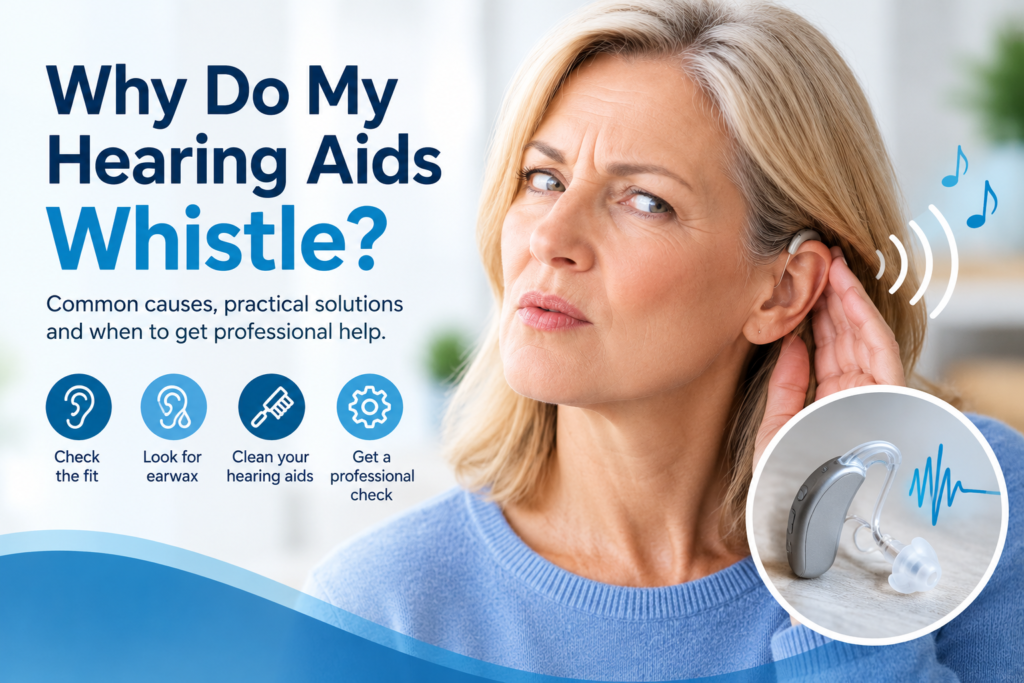
If your hearing aids suddenly make a high pitched whistling or squealing sound, you may wonder whether something is wrong with the device.
Occasional whistling can happen with hearing aids, particularly when you are putting them in, removing them or adjusting their position. However, persistent hearing aid whistling is not something you simply have to accept.
In many cases, the problem can be identified and corrected by checking the fit, cleaning the device or having the hearing aids professionally adjusted.
So, why do hearing aids whistle?
The most common reason is sound leaking out of the ear and being picked up again by the hearing aid microphone. This creates a feedback loop that produces the familiar high pitched whistle.
In this guide, we explain the most common causes of hearing aid whistling and what you can do about them.
What Is Hearing Aid Feedback?
The whistling sound produced by a hearing aid is usually called feedback.
Hearing aids work by picking up sounds through a microphone, processing those sounds and delivering amplified sound into your ear.
Normally, the amplified sound stays inside the ear canal.
If some of that sound escapes and reaches the hearing aid microphone again, the device may amplify it repeatedly. This can create a high pitched sound similar to a whistle.
This is known as acoustic feedback.
Modern hearing aids have sophisticated feedback-management systems designed to reduce this problem. However, feedback can still occur under certain circumstances.
Why Are My Hearing Aids Whistling?
There are several possible reasons your hearing aids may be whistling.
1. Your Hearing Aid Is Not Fitted Correctly
One of the most common causes is an issue with the fit.
If the hearing aid, ear mould or dome does not fit securely in your ear, amplified sound can escape.
That escaping sound may then be picked up by the microphone and amplified again.
This can result in whistling.
A hearing professional can check whether the hearing aid is sitting correctly and whether the fitting needs to be changed.
2. Earwax Can Cause Hearing Aid Feedback
Earwax can sometimes contribute to hearing aid feedback.
If there is a significant amount of wax in the ear canal, amplified sound may reflect off the wax and return towards the hearing aid.
This can increase the likelihood of feedback.
Earwax can also interfere with the way a hearing aid or ear mould sits in the ear.
If you wear hearing aids and are experiencing new or persistent whistling, it may be worth having your ears checked for wax build-up.
Do not attempt to remove deep earwax yourself with cotton buds or other objects.
Professional earwax assessment and removal may be appropriate if there is a blockage.
3. Your Hearing Aid May Need Cleaning
Wax, moisture and debris can affect the performance of your hearing aids.
For example, if the microphone opening, speaker or wax filter becomes blocked, the device may not work as intended.
Regular cleaning and maintenance can help keep your hearing aids functioning properly.
The exact cleaning routine depends on the type of hearing aid you use.
Follow the manufacturer’s instructions and the advice provided by your hearing-care professional.
4. The Hearing Aid May Have Moved
Sometimes the hearing aid simply moves out of its correct position.
This can happen while:
Putting on glasses
Wearing a hat
Adjusting your hair
Exercising
Sleeping
Removing a face covering
Touching your ear
Putting the hearing aid in or taking it out
If the hearing aid moves slightly, the seal between the device and your ear may change.
That can allow amplified sound to escape and cause feedback.
Try carefully repositioning the hearing aid.
If it repeatedly moves or whistles, speak to your hearing professional about the fit.
5. Your Ear Mould or Dome May Not Fit Properly
People’s ears change over time.
The shape of the ear canal can also change, and an ear mould or dome that previously fitted well may eventually become less effective.
If there is too much space around the hearing aid, sound can escape more easily.
This may result in feedback.
Your hearing professional can assess the fit and determine whether a different dome, mould or fitting is appropriate.
6. Your Hearing Aids May Be Set Too Loud
Hearing aids need to provide enough amplification to make speech and other important sounds accessible.
However, excessive amplification can sometimes increase the risk of feedback.
If your hearing aids have recently been adjusted and you have started experiencing persistent whistling, contact your hearing-care professional.
The settings may need to be reviewed.
This does not necessarily mean that the hearing aids are unsuitable for you. A relatively small programming adjustment may improve the situation.
7. Holding Your Hand Near Your Ear Can Cause Whistling
You may notice that your hearing aids whistle when you put your hand close to your ear.
This is because your hand can reflect amplified sound back towards the hearing aid microphone.
You might experience the same effect when:
Hugging someone
Putting your phone near your ear
Adjusting your hair
Wearing a hat
Placing your hand behind your ear
Occasional feedback in these situations does not necessarily indicate a problem.
However, if your hearing aids whistle when your hands are nowhere near your ears, they should be checked.
8. Your Hearing May Have Changed
Changes in your hearing can sometimes affect the amount of amplification your hearing aids need.
If your hearing levels have changed, your existing hearing-aid settings may no longer be ideal.
If you have noticed a sudden increase in feedback alongside a change in your hearing, arrange a hearing assessment.
Your hearing professional can determine whether your hearing aids need reprogramming or whether another issue needs to be investigated.
Why Do My Hearing Aids Whistle When I Put Them In?
It is fairly common for hearing aids to make a brief whistling sound while you are putting them in.
Until the device is correctly positioned in your ear, amplified sound may escape.
Once the hearing aid is seated properly, the feedback should normally stop.
If it continues to whistle after you have positioned it correctly, there may be an issue with the fit, settings, wax filter, earwax or device itself.
Why Do My Hearing Aids Whistle When I Touch Them?
Touching or adjusting your hearing aids can temporarily cause feedback.
Your fingers may create a pathway that reflects sound back towards the microphone.
This can happen when you:
Push the hearing aid into place
Adjust the volume
Remove the device
Touch your ear
Put on glasses
Brush your hair
A brief whistle during these activities is not necessarily a concern.
Persistent feedback when you are not touching the device is more likely to require investigation.
Why Do My Hearing Aids Whistle When I Hug Someone?
You may notice feedback when another person’s head gets close to your hearing aid.
This is because the surrounding surfaces can reflect amplified sound back towards the microphone.
Hugs, leaning against someone or placing your head against a pillow can sometimes trigger temporary feedback.
Again, occasional feedback in these situations can be normal.
However, if your hearing aids whistle frequently during ordinary activities, a professional fitting check may help.
Can Earwax Make Hearing Aids Whistle?
Yes, earwax can contribute to hearing aid feedback in some circumstances.
A build-up of wax can change the acoustics of the ear canal and interfere with the way amplified sound travels.
It can also affect the way an ear mould or hearing-aid dome sits in the ear.
If you use hearing aids and notice that they have suddenly started whistling when they previously worked normally, earwax is one possible cause.
Other causes should also be considered.
A hearing-care professional can examine your ears and hearing aids to determine what is happening.
Should I Turn My Hearing Aids Off If They Whistle?
If your hearing aids are continuously whistling and you cannot resolve the problem by correctly repositioning them, you can remove them temporarily.
However, repeatedly avoiding your hearing aids without finding the cause will not solve the underlying problem.
Persistent feedback is worth having checked.
A professional can assess:
The physical fit
Earwax levels
The ear mould or dome
The hearing-aid settings
The microphones
The speaker or receiver
The wax filter
The overall condition of the device
How Can I Stop My Hearing Aids From Whistling?
There are several things you can try if your hearing aids are whistling.
Check the Position
Remove and carefully reinsert the hearing aid according to the manufacturer’s instructions.
Make sure it is sitting correctly.
Check for Earwax
If you suspect you have blocked ears, arrange an ear examination rather than trying to remove deep wax yourself.
Clean Your Hearing Aids
Check the device for visible wax, dirt or debris and clean it according to the manufacturer’s instructions.
Check the Wax Filter
Many hearing aids have replaceable wax filters.
If the filter is blocked, it may affect the performance of the device.
Ask your hearing-care professional if you are unsure how to replace it.
Check the Dome or Ear Mould
If the dome or mould is damaged, loose or no longer fitting correctly, it may need replacing.
Reduce the Volume Temporarily
If the whistling is related to excessive amplification, reducing the volume may sometimes reduce feedback.
However, do not permanently reduce your hearing-aid volume simply to hide a problem.
The device should be professionally adjusted if necessary.
Arrange a Hearing-Aid Check
If the problem continues, professional assessment is usually the best solution.
Can Hearing Aids Be Adjusted to Stop Whistling?
Yes.
Modern hearing aids have sophisticated digital processing and feedback-management systems.
A hearing professional can assess how your hearing aids are performing and make appropriate adjustments.
Depending on the cause, this may involve changing the amplification settings, checking the physical fit or addressing another problem with the device.
Your hearing aids should be programmed according to your hearing needs and the way you use them in everyday life.
Is Hearing Aid Whistling a Sign That My Hearing Aids Are Broken?
Not necessarily.
Whistling does not automatically mean that your hearing aids are faulty.
Feedback can result from something as simple as the device being incorrectly positioned.
It can also be related to earwax, the fit of the dome or mould, changes in hearing, or the hearing-aid settings.
Before assuming that your hearing aids need replacing, have them professionally checked.
When Should I Get My Hearing Aids Checked?
You should consider arranging a hearing-aid check if:
Your hearing aids suddenly start whistling
The whistling happens frequently
The devices whistle even when you are sitting still
Your hearing aids no longer fit comfortably
Your speech sounds distorted
Sounds seem unusually loud
You are struggling to hear conversations
The hearing aids repeatedly move out of position
You suspect earwax build-up
Cleaning has not resolved the problem
A professional assessment can identify whether the problem is related to the ear, the hearing-aid fit, the programming or the device itself.
How Often Should Hearing Aids Be Professionally Serviced?
The appropriate service interval depends on the hearing aids you use and your individual circumstances.
Regular maintenance can help identify issues before they become more serious.
During a hearing-aid appointment, your hearing professional may check the physical condition of the devices, clean them, assess their performance and make adjustments where necessary.
If you notice a problem between routine appointments, you do not need to wait for your next scheduled visit.
Frequently Asked Questions
Why do my hearing aids whistle when I put them in?
A brief whistle can occur while the hearing aid is being positioned because amplified sound can escape before the device is correctly seated. If the whistling continues once it is in place, the fit or settings may need to be checked.
Can earwax cause hearing aid feedback?
Yes. Earwax can alter the acoustics of the ear canal and may contribute to feedback. If you suspect a blockage, arrange a professional ear examination.
Is it normal for hearing aids to whistle occasionally?
Occasional feedback can occur when touching or adjusting a hearing aid, putting it in or taking it out, or placing something close to the ear. Frequent or persistent whistling should be checked.
How do I stop my hearing aids from whistling?
Check that they are positioned correctly, keep them clean and check the dome or mould. If the problem continues, arrange a professional hearing-aid fitting and performance check.
Can changing the hearing-aid settings stop whistling?
Sometimes. Your hearing professional may be able to adjust the programming or feedback-management settings. The physical fit should also be assessed.
Do hearing aids need replacing if they whistle?
Not necessarily. Feedback is often caused by fitting, earwax, settings or maintenance issues rather than a completely faulty hearing aid. A professional assessment can help determine the cause.
The Bottom Line
Hearing aid whistling is usually caused by feedback, which occurs when amplified sound escapes from the ear and is picked up by the hearing aid microphone.
The problem can have several causes, including an incorrect fit, earwax, a loose or damaged dome, blocked filters, changes in hearing or hearing-aid settings.
Occasional whistling during activities such as inserting your hearing aids or touching them can be normal. Persistent whistling, however, should not simply be ignored.
If your hearing aids are regularly whistling, arrange a professional check. Your hearing professional can examine your ears, assess the fit and condition of your devices, and make adjustments where necessary.
A properly fitted and correctly programmed hearing aid should help you hear more comfortably without constant distracting feedback.