
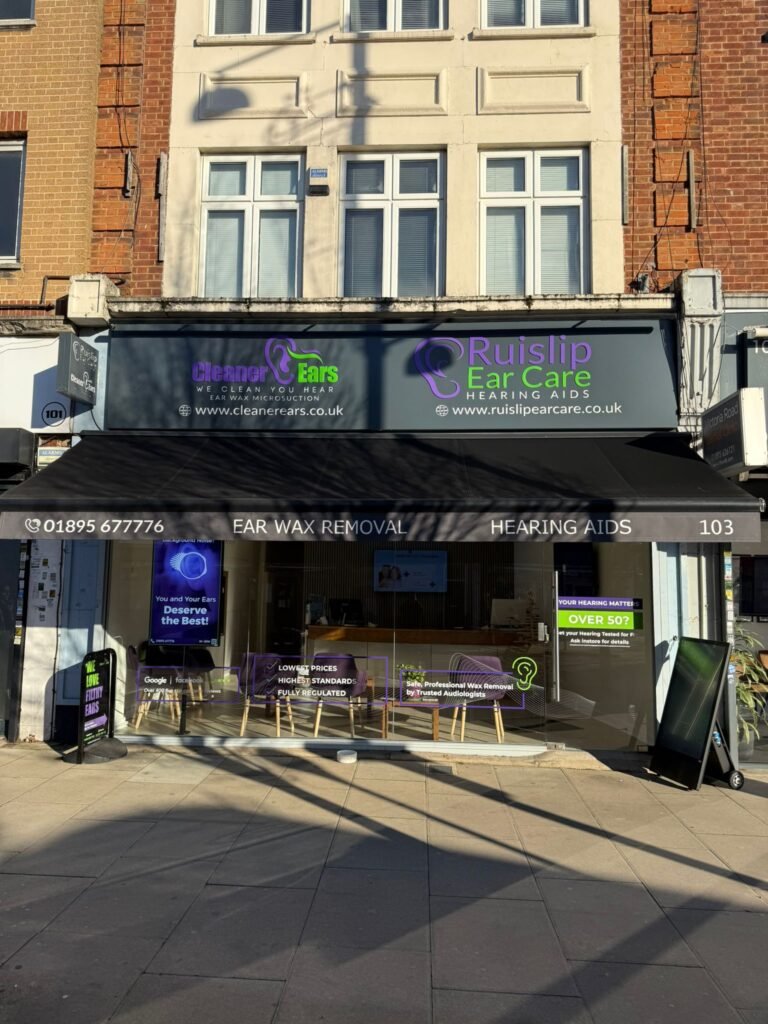
Finding a reliable clinic for ear wax removal in Ruislip Manor can make it easier to get the professional help you need when your ears feel blocked, your hearing seems muffled or excess ear wax is causing discomfort. Although ear wax is a natural and important part of ear health, it can sometimes accumulate inside the ear canal and interfere with hearing or cause other symptoms.
Cleaner Ears provides professional ear wax removal using microsuction at its Ruislip Manor clinic, offering an appointment-based service for people who need their ears examined and, where appropriate, excess wax removed. The clinic also provides hearing care services for people who want advice about their hearing or hearing aids.
Whether you live in Ruislip Manor, Ruislip, South Ruislip, Eastcote or a nearby part of North West London, this guide explains how professional ear wax removal works, what to expect at your appointment, how much treatment costs and how to arrange a visit to Cleaner Ears.
Where to Get Ear Wax Removal in Ruislip Manor

Cleaner Ears is located at:
Cleaner Ears – Ruislip Manor Clinic
103 Victoria Road, Ruislip, HA4 9BN, United Kingdom
Telephone: 01895 677776
Appointments
Contact the clinic to confirm availability, treatment suitability and the current price before attending.
The clinic is situated on Victoria Road in the Ruislip Manor area, making it a local option for people looking for professional ear wax removal in Ruislip. If you are travelling from elsewhere in the surrounding area, check your route and appointment details before setting off.
When planning your visit, it is worth allowing enough time to arrive, check in and discuss your symptoms with the practitioner. If you have a history of ear problems or have concerns about your hearing, mention these when arranging your appointment so the clinic can advise you appropriately.
What Is Ear Wax and Why Does It Build Up?
Ear wax, also known as cerumen, is a natural substance produced in the ear canal. It helps protect the ears by trapping dust and other small particles, lubricating the skin and supporting the ear canal’s natural protective processes.
For most people, ear wax gradually moves towards the opening of the ear and falls away naturally. This means that regular professional cleaning is not necessary for everyone. Problems can arise, however, when wax accumulates faster than it clears or becomes impacted inside the ear canal.
Several factors can contribute to ear wax build-up. Some people naturally produce more wax than others, while age-related changes can make wax drier or harder. Hearing aids and in-ear devices may also interfere with the natural movement of wax in some people. Using cotton buds or inserting other objects into the ear can push wax further inside rather than removing it.
When wax becomes impacted, it may cause symptoms that affect everyday life. You might notice that conversations sound less clear, that one ear feels blocked or that sounds seem quieter than usual. Some people also experience itching, discomfort, ringing in the ears or a sensation of fullness.
These symptoms do not always mean that ear wax is responsible. Ear infections, pressure changes and other ear conditions can cause similar problems. A suitable examination is therefore important before deciding whether wax removal is needed.
Signs You May Need Professional Ear Wax Removal
Recognising the signs of excessive ear wax can help you decide when to seek advice. Although mild build-up does not always require treatment, persistent symptoms deserve attention.
1. Blocked or Full Ears
A blocked sensation is one of the common reasons people look for ear wax removal in Ruislip Manor. You may feel as though something is covering the ear canal or preventing sounds from reaching you clearly. The sensation can affect one ear or both ears.
Ear wax is one possible cause, but pressure changes, congestion and other conditions may produce similar symptoms. Avoid inserting cotton buds or other objects into the ear to investigate the problem yourself.
2. Muffled Hearing
When wax obstructs the ear canal, sounds may seem quieter or less distinct. You might find yourself increasing the television volume, asking people to repeat themselves or struggling to follow conversations in noisy environments.
If hearing difficulties persist, a professional examination can help establish whether wax is contributing to the problem. Hearing loss that begins suddenly requires urgent medical assessment rather than an assumption that wax is responsible.
3. Ringing or Buzzing in the Ears
Some people with excessive ear wax experience tinnitus, which describes hearing sounds such as ringing, buzzing or humming without an external source.
Ear wax may contribute to tinnitus in some cases, but tinnitus has many possible causes. If you develop persistent ringing, particularly alongside changes in hearing, arrange an appropriate assessment. Sudden hearing loss accompanied by tinnitus needs urgent medical attention.
4. Ear Discomfort or Itching
Excessive wax may contribute to irritation, itching or a feeling of pressure in the ear. However, these symptoms can also occur with inflammation, infection or skin conditions affecting the ear canal.
Avoid scratching inside the ear or using household objects to relieve the itching. If symptoms persist or become painful, seek professional advice.
5. Hearing Aid Problems
Wax can accumulate around hearing aids and may affect how they fit or perform. If your device begins sounding quieter, whistles unexpectedly or seems to work inconsistently, wax is one possible explanation.
Check the device according to its manufacturer’s care instructions and arrange an ear examination if you suspect a blockage. Not every hearing aid problem is caused by wax, so the device itself may also need checking.
What Is Microsuction Ear Wax Removal?

Microsuction is a professional method of removing excess ear wax using a small suction device while the practitioner views the ear canal. It is commonly used in specialist ear care because it allows the practitioner to observe the area being treated throughout the procedure.
Unlike ear irrigation, which uses water to help remove wax, microsuction is a dry method. The practitioner examines the ear, assesses the amount and position of the wax, and determines whether removal is appropriate.
At Cleaner Ears, microsuction is the main method advertised for professional ear wax removal in Ruislip Manor. The procedure is carried out as part of an appointment, with the approach determined by the findings of the ear examination.
How Does Microsuction Work?
Microsuction generally involves several stages.
Step 1: Examination of the ear
The practitioner examines the ear canal to assess the wax and the condition of the visible ear canal and eardrum, where visibility permits. This helps establish whether wax removal is appropriate and whether there are signs that require a different course of action.
Step 2: Explaining the procedure
Before starting, the practitioner should explain what the procedure involves, discuss relevant risks and answer your questions. Tell them about any previous ear surgery, perforated eardrum, current ear pain, discharge or other relevant medical history.
Step 3: Removing excess wax
If treatment is suitable, the practitioner uses a fine suction instrument to remove the wax under direct visual control. The equipment and technique are selected according to the individual circumstances.
Step 4: Checking the ear afterwards
Following removal, the practitioner can assess the visible ear canal and explain any relevant findings. If symptoms remain, further medical assessment or hearing testing may be appropriate.
Is Microsuction Better Than Ear Syringing?
Microsuction and irrigation are different methods, and the most appropriate option depends on the person’s medical history and the condition of the ear.
Microsuction does not involve introducing water into the ear canal. This can be useful for people for whom irrigation may be unsuitable. However, microsuction is not risk-free, and suitability must be assessed individually.
Feature | Microsuction | Ear irrigation |
|---|---|---|
Method | Uses suction to remove wax | Uses controlled water flow to remove wax |
Water introduced into the ear | No | Yes |
Visual monitoring | Performed under direct visual control | Technique and monitoring vary |
Suitability | Depends on examination and medical history | Depends on examination and medical history |
Possible side effects | Discomfort, noise sensitivity, dizziness or injury in some cases | Discomfort, dizziness, infection or injury in some cases |
There is no single technique that is right for every person. If you have had ear surgery, have a perforated eardrum or experience recurrent ear problems, explain this before treatment so the practitioner can assess the safest appropriate approach.
How Much Does Ear Wax Removal Cost in Ruislip Manor?
Knowing the price before booking makes it easier to plan your appointment. Cleaner Ears currently lists the following prices on its website.
One ear
Microsuction ear wax removal
£35
Both ears
Microsuction ear wax removal
£49
Home visit
Subject to service area and availability
£99
Prices are published website rates and may change. Confirm the current charge and any consultation or follow-up fees directly with the clinic before booking.
The listed price for one ear is £35, while treatment for both ears is £49. The clinic also advertises a home-visit service for £99, which may be useful for eligible patients who find travelling to an appointment difficult.
The amount of wax present, the condition of the ear canal and your medical history may influence the treatment recommended. A practitioner should assess the ear before deciding whether removal can proceed.
When booking, ask whether the listed price covers the assessment and treatment you need, what happens if no wax is present, and whether a follow-up appointment could incur an additional fee. Clear information beforehand helps you make an informed decision.
How to Book an Ear Wax Removal Appointment
Arranging professional ear wax removal in Ruislip Manor can be straightforward if you prepare a few details before contacting the clinic.
Step 1: Contact Cleaner Ears
Visit the Cleaner Ears website to find the available booking options and service information. You can also telephone the clinic on 01895 677776 to ask about appointments.
Step 2: Explain Your Symptoms
When arranging your appointment, explain whether you have a blocked ear, muffled hearing, itching, discomfort or another concern. Mention whether one ear or both ears are affected and how long you have experienced the symptoms.
If you have a history of ear surgery, recurrent infections, a perforated eardrum or other relevant medical conditions, tell the clinic before attending.
Step 3: Confirm Availability and Price
Ask which appointment times are available and confirm the current cost. Same-day appointments may be available depending on the clinic’s schedule, but availability should be confirmed directly rather than assumed.
Step 4: Follow Any Preparation Advice
Some people may be advised to use suitable ear-softening drops before their appointment. Whether this is appropriate depends on their medical history and the condition of their ears. Do not use drops without checking their suitability if you have a perforated eardrum, previous ear surgery or other relevant ear problems.
Step 5: Attend Your Appointment
Arrive at the confirmed time and share any relevant changes in your symptoms. The practitioner will assess your ears and discuss whether microsuction or another course of action is appropriate.
If wax is not the cause of your symptoms, the practitioner may recommend further assessment rather than attempting unnecessary removal.
What Happens During Your Appointment?
It is normal to have questions before visiting an ear care clinic, particularly if you have never had microsuction before.
Your appointment should begin with a discussion of your symptoms and relevant medical history. The practitioner will examine your ears and explain the findings. If there is wax that can appropriately be removed, they will discuss the procedure before proceeding.
During microsuction, you will usually hear the sound of the suction equipment. Some people find the noise unusual or experience temporary sensitivity to it. You may also notice mild discomfort or dizziness, although experiences vary. Tell the practitioner if you feel uncomfortable so they can pause and reassess.
The time required depends on how much wax is present, its consistency and the circumstances of the appointment. Straightforward procedures may be relatively brief, while harder or more deeply impacted wax may require additional care or a follow-up visit.
Afterwards, the practitioner can explain the findings and provide appropriate aftercare advice. If your hearing remains muffled, or if you continue experiencing pain, dizziness or tinnitus, further assessment may be necessary.
Getting to the Cleaner Ears Clinic in Ruislip Manor
Cleaner Ears is located at 103 Victoria Road, Ruislip, HA4 9BN. The clinic serves patients seeking ear wax removal in Ruislip Manor and the surrounding area.
If you are travelling by public transport, check current services and routes to Ruislip Manor before your appointment. If you are driving, plan your route to Victoria Road and check local parking restrictions and availability, as these may vary.
Patients travelling from nearby neighbourhoods may also wish to confirm the location directly with the clinic before setting off. If you have mobility requirements or need additional assistance, ask about access arrangements when booking.
You can use Google Maps to find the clinic and plan your journey.
Who Can Benefit from Professional Ear Wax Removal?
Professional assessment may be helpful for people whose ear wax has become impacted or is causing symptoms. This includes adults who notice muffled hearing, people who wear hearing aids and individuals who have experienced recurring wax build-up.
Older adults may be more likely to experience changes in the consistency of ear wax. Hearing aid users may also find that wax affects the fit or performance of their devices.
However, not everyone needs their ears cleaned professionally. Ear wax serves a protective purpose, and removing it unnecessarily can irritate the ear canal. If you have no symptoms and your ears are healthy, routine removal may not be needed.
For children, people with complex ear histories and those experiencing persistent symptoms, the appropriate assessment and treatment depend on age, medical history and the services available.
Why You Should Avoid Removing Ear Wax Yourself
It can be tempting to use cotton buds, hairpins or other objects when your ears feel blocked. These approaches can push wax deeper into the canal and may damage the delicate skin or eardrum.
Ear candles are also not recommended because they have not been shown to remove ear wax safely and effectively and can cause injury.
If you suspect a build-up, avoid inserting objects into the ear. A pharmacist or healthcare professional can advise you about appropriate wax-softening products, including when these should not be used.
Professional assessment is especially important when you experience significant pain, discharge, bleeding, sudden hearing loss or other unusual symptoms. These problems should not automatically be attributed to ear wax.
Can Ear Wax Affect Your Hearing?
Yes. When excess wax blocks the ear canal, it can interfere with the passage of sound and contribute to temporary hearing difficulties.
You may find conversations less clear, struggle to hear the television at its usual volume or notice that one ear sounds different from the other. In some cases, wax can also contribute to tinnitus or a feeling of fullness.
If wax is responsible, appropriate removal may improve hearing. However, not all hearing difficulties are caused by wax, and removing it does not treat unrelated hearing conditions.
If you continue to struggle with conversations after wax has been removed, consider a hearing assessment. Cleaner Ears also advertises hearing care and hearing-aid services for people who need further support.
Ear Wax Removal for Hearing Aid Users in Ruislip
People who wear hearing aids may experience wax build-up that affects their devices or contributes to a blocked sensation. Wax can collect around hearing aid components and, in some cases, interfere with sound output.
If your hearing aids begin whistling, sound quieter than usual or become less effective, follow the manufacturer’s cleaning guidance and check whether the device requires maintenance. Do not insert cleaning tools into your ear canal.
A professional ear examination can help determine whether wax is contributing to the problem. If the ear canal is clear, the hearing aid may need adjustment, cleaning or servicing instead.
For people who are also experiencing ongoing hearing difficulties, an audiologist can advise whether further testing or a review of their hearing aids would be useful.
How Often Should You Have Ear Wax Removed?
There is no single schedule that applies to everyone. Some people rarely experience excessive ear wax, while others develop recurring build-up that causes symptoms.
The frequency of professional removal depends on factors such as your natural wax production, the use of hearing aids, the shape of your ear canals and any previous ear problems. People with recurring impaction may benefit from a personalised plan recommended by an appropriate healthcare professional.
Avoid arranging repeated cleaning simply because a particular number of weeks has passed. Ear wax is normal, and unnecessary removal can irritate the skin inside the ear canal.
If you regularly experience blocked ears, ask the practitioner to explain how to manage recurring build-up safely and when another examination might be appropriate.
Serving Ruislip Manor and the Surrounding Areas
Cleaner Ears provides ear care for people seeking professional microsuction in Ruislip Manor and nearby parts of North West London.
Patients may travel from surrounding areas for an appointment, depending on their location and individual needs.
Ear Wax Removal in Ruislip
If you live in Ruislip and have noticed blocked ears, muffled hearing or suspected ear wax build-up, a professional examination can help establish whether treatment is appropriate.
Visit the Cleaner Ears ear wax removal service for information about the clinic’s services, pricing and booking options.
Ear Wax Removal in South Ruislip
South Ruislip residents may also consider the Ruislip Manor clinic when looking for professional ear care nearby. Check your route and confirm appointment availability before travelling.
Ear Wax Removal in Eastcote
People in Eastcote who are experiencing symptoms of impacted ear wax can contact Cleaner Ears to discuss whether an appointment at the Ruislip Manor clinic would be suitable.
Ear Wax Removal in Northwood and Pinner
Residents of Northwood and Pinner may also wish to enquire about appointments at the clinic. The best option will depend on travel arrangements, available appointments and the services required.
If you are unsure whether the clinic can accommodate your needs, contact the team before booking.
Frequently Asked Questions About Ear Wax Removal in Ruislip Manor
1. Where is Cleaner Ears located in Ruislip Manor?
Cleaner Ears is listed at 103 Victoria Road, Ruislip, HA4 9BN, United Kingdom. The clinic provides professional ear wax removal using microsuction and also advertises hearing care services. You can contact the clinic on 01895 677776 to confirm the address, current appointment availability and any details you need before visiting. If you are travelling from outside Ruislip Manor, check the route to Victoria Road and allow sufficient time to arrive for your appointment.
2. How much does ear wax removal cost at Cleaner Ears?
The Cleaner Ears website currently lists microsuction at £35 for one ear and £49 for both ears. It also lists a home-visit service at £99. Prices may change, and the appropriate treatment depends on your examination and medical history. Before booking, confirm the current fees and ask whether consultation, follow-up or any additional services would incur a separate charge.
3. What is microsuction ear wax removal?
Microsuction is a professional technique that uses a small suction device to remove excess ear wax under direct visual control. Unlike irrigation, it does not introduce water into the ear canal. The practitioner first examines your ear to assess whether the procedure is suitable. Although microsuction is commonly used for ear wax removal, it can cause discomfort, noise sensitivity or dizziness in some people. Your practitioner should explain the procedure, its potential risks and any alternatives appropriate to your circumstances.
4. Is microsuction painful?
Many people tolerate microsuction well, although the experience varies. You may hear a relatively loud suction sound, feel mild discomfort or experience temporary sensitivity during the procedure. The practitioner should explain what to expect and respond to any discomfort you report. If the wax is particularly hard or the ear canal is sensitive, treatment may need to be modified or postponed. Do not feel that you must continue if you are uncomfortable; tell the practitioner so they can reassess the situation.
5. Can I get same-day ear wax removal in Ruislip Manor?
Same-day appointments may be available, but this depends on the clinic’s schedule and the type of care required. Contact Cleaner Ears on 01895 677776 to check availability before travelling. Explain your symptoms and ask whether an appointment is appropriate. If you have sudden hearing loss, severe ear pain, bleeding or discharge, seek appropriate medical assessment rather than delaying care while waiting for a routine wax-removal appointment.
6. Do I need to use ear drops before microsuction?
Not everyone needs ear drops before microsuction. In some cases, a practitioner may recommend suitable softening drops to help with hard or impacted wax. However, some products may be unsuitable for people with a perforated eardrum, previous ear surgery or particular ear conditions. Ask the clinic for advice based on your medical history rather than automatically using drops before your appointment.
7. How long does an ear wax removal appointment take?
The time required varies depending on the amount and consistency of the wax, the condition of the ear canal and whether one or both ears need treatment. Straightforward appointments may be relatively short, while difficult impactions can require additional care. Allow enough time for the initial discussion, examination, procedure and aftercare advice. When booking, ask the clinic how long you should allow for your appointment.
8. Can ear wax cause muffled hearing?
Yes. Excess wax can obstruct the ear canal and interfere with sound reaching the eardrum, resulting in muffled hearing. However, hearing changes can also arise from other ear conditions or problems affecting hearing itself. If you have persistent hearing difficulties, a professional examination can help identify the possible cause. Sudden hearing loss needs urgent medical assessment and should not be assumed to be caused by wax.
9. Can ear wax cause tinnitus or ringing in the ears?
Ear wax build-up can contribute to tinnitus in some people, but ringing or buzzing can have several causes. If tinnitus persists, becomes troublesome or occurs alongside hearing changes, arrange an appropriate assessment. Sudden hearing loss accompanied by tinnitus requires urgent medical attention. Removing wax may help when it is a contributing factor, but it will not necessarily resolve tinnitus caused by another condition.
10. Is ear wax removal necessary if my ears feel normal?
No. Ear wax has a natural protective role, and most people do not need routine professional removal when they have no symptoms or other clinical reason for treatment. Unnecessary cleaning can irritate the ear canal and disrupt its normal protective processes. If you have a history of recurrent impaction or have been advised to arrange regular checks, follow the personalised guidance provided by your healthcare professional.
11. What should I do after microsuction?
Follow the aftercare instructions provided by your practitioner. Avoid inserting cotton buds or other objects into your ears, and ask for advice if you are unsure about using ear drops or other products. Some people experience temporary sensitivity after microsuction. If you develop significant pain, bleeding, discharge, persistent dizziness or worsening hearing, seek medical advice promptly.
12. Can I book ear wax removal if I wear hearing aids?
Yes, hearing aid users can enquire about an ear examination and appropriate wax management. Wax may contribute to blocked ears or affect hearing aid performance, but other issues can produce similar symptoms. Tell the practitioner which hearing aids you use and whether you have noticed changes in sound quality, fit or comfort. If wax is not responsible, you may need hearing aid maintenance, adjustment or a hearing assessment instead.
13. Does Cleaner Ears offer home visits?
Cleaner Ears lists a home-visit service priced at £99 on its website. Availability may depend on your location, mobility requirements and the appointment schedule. Contact the clinic to confirm whether a visit is available at your address and whether the service is suitable for your needs. Ask about the full cost and what the appointment includes before making arrangements.
14. How do I book ear wax removal in Ruislip Manor?
Visit cleanerears.co.uk to review the service information and available booking options, or call 01895 677776. Explain your symptoms, mention any relevant ear history and ask about the current price and appointment availability. Confirm the clinic address and any preparation advice before attending. If you have symptoms that suggest a more urgent medical problem, seek appropriate medical advice rather than relying on a routine wax-removal booking.
Book Professional Ear Wax Removal in Ruislip Manor
If you are experiencing blocked ears, muffled hearing or suspected ear wax build-up, Cleaner Ears can help you explore the appropriate next steps.
The Ruislip Manor clinic is located at 103 Victoria Road, Ruislip, HA4 9BN, and offers microsuction ear wax removal alongside hearing care services. An examination can help determine whether excess wax is responsible for your symptoms and whether removal is appropriate.
To find out more about prices, appointments and the available services, visit the Cleaner Ears website or telephone 01895 677776.
Take the first step towards understanding your ear health by arranging an assessment when you need one.