
Ear Infection: Symptoms, Causes, Treatment and When to Seek Help
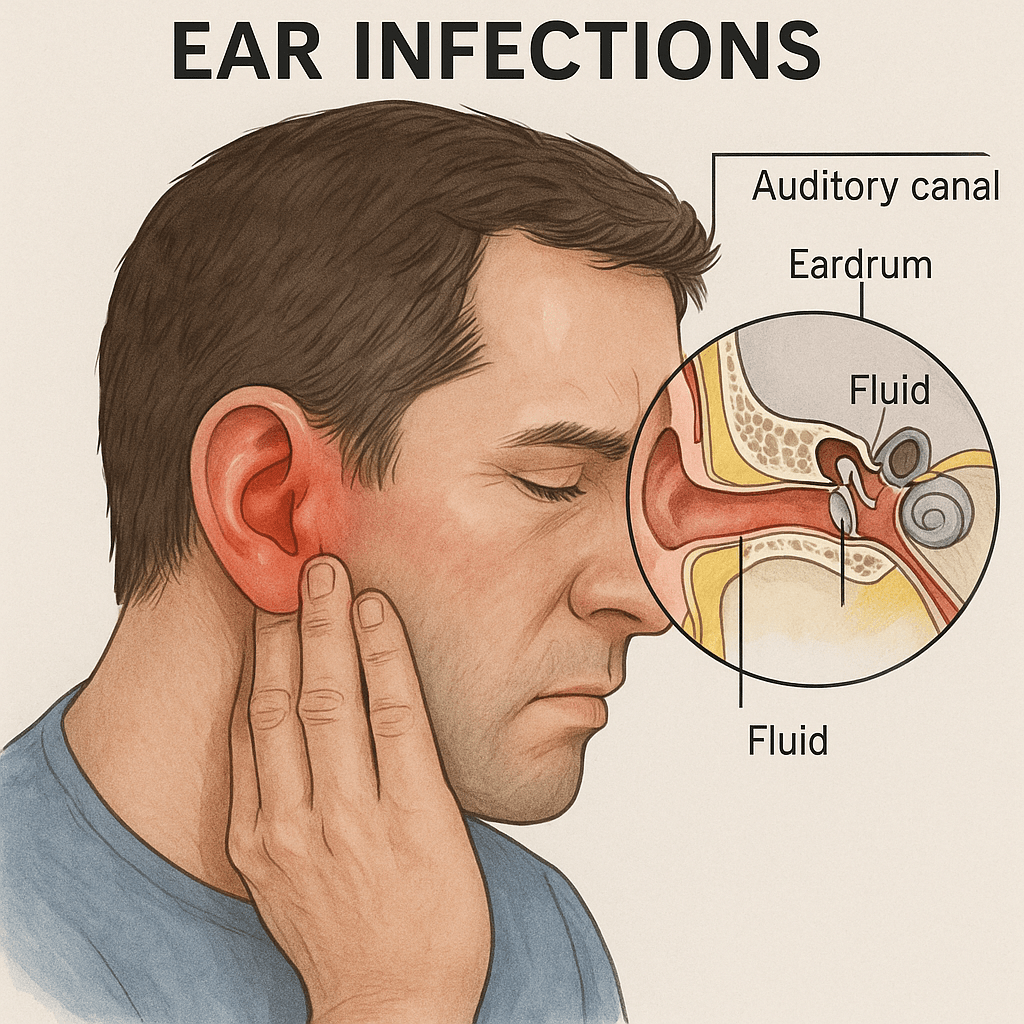
An ear infection can cause pain, pressure, itching, discharge and changes in hearing. While some ear infections clear with appropriate care, others may require medical assessment and treatment.
Because some symptoms of an ear infection can look similar to problems caused by ear wax build-up, it is important to understand the difference.
In this guide, we explain the common symptoms of ear infections, what can cause them, and when you should seek professional advice.
What Is an Ear Infection?
An ear infection occurs when part of the ear becomes inflamed or infected.
There are different types of ear infections, depending on which part of the ear is affected.
Outer ear infection
An outer ear infection affects the ear canal and is often known as swimmer’s ear or otitis externa.
It can develop when the skin inside the ear canal becomes irritated or infected. Water remaining in the ear after swimming can contribute to the problem.
Middle ear infection
A middle ear infection affects the area behind the eardrum.
These infections can sometimes develop following a cold or respiratory infection, particularly when the Eustachian tube becomes blocked.
Inner ear problems
Problems affecting the inner ear are less commonly referred to simply as an “ear infection”. Conditions affecting the inner ear can sometimes cause symptoms such as dizziness, balance problems or hearing changes and require appropriate medical assessment.
What Are the Symptoms of an Ear Infection?
Symptoms can vary depending on the type and severity of the infection.
Common symptoms may include:
- Ear pain
- Ear tenderness
- A feeling of pressure or fullness
- Itching
- Redness or swelling
- Muffled or reduced hearing
- Fluid or discharge from the ear
- Ringing in the ear
- Fever in some cases
- Dizziness or balance problems in some situations
You do not need to have every symptom to have an ear infection.
What Causes Ear Infections?
Different factors can contribute to different types of ear infections.
For outer ear infections, possible factors include:
- Water remaining in the ear
- Swimming
- Irritation of the ear canal
- Scratching inside the ear
- Using cotton buds or other objects inside the ear
- Certain skin conditions
Middle ear infections can occur following respiratory infections such as colds, particularly when fluid becomes trapped behind the eardrum.
Can Ear Wax Cause an Ear Infection?
Ear wax itself is not the same thing as an ear infection.
Ear wax is a natural substance that helps protect and lubricate the ear canal. However, excessive or impacted ear wax can sometimes contribute to problems within the ear canal.
It can also cause symptoms that resemble an ear infection, including:
- Blocked hearing
- Muffled hearing
- Ear pressure
- Discomfort
- Itching
- Tinnitus
This is why it is important not to assume that every blocked or uncomfortable ear is caused by an infection or ear wax.
An appropriate ear examination can help determine what is happening.
How Can You Tell the Difference Between Ear Wax and an Ear Infection?
There can be some overlap between the symptoms.
Ear wax build-up commonly causes:
- Blocked ears
- Muffled hearing
- A feeling of fullness
- Reduced hearing
- Occasionally tinnitus or discomfort
An ear infection may be more likely to cause:
- Significant ear pain
- Tenderness
- Itching or inflammation
- Discharge
- Swelling
- Fever in some cases
However, symptoms alone cannot always establish the cause.
If you have persistent symptoms, an ear examination is the safest way to determine what may be happening.
Can You Remove Ear Wax If You Have an Ear Infection?
If you suspect you have an ear infection, do not simply assume that ear wax removal will solve the problem.
The ear should be assessed first.
Depending on what is found, a healthcare professional may recommend treatment for the infection or another appropriate approach.
Professional ear wax removal may be considered when excessive wax is confirmed and treatment is appropriate.
Can You Swim With an Ear Infection?
It is generally sensible to avoid swimming while you have an active ear infection, particularly if you have pain, discharge or inflammation.
Water entering an irritated ear canal may worsen discomfort and potentially delay recovery.
Ask your healthcare professional when it is appropriate for you to return to swimming.
Can Cotton Buds Cause Ear Infections?
Putting cotton buds into the ear canal can irritate the delicate skin and potentially push ear wax deeper into the ear.
Small areas of irritation or damage to the skin can also make it easier for infection to develop.
For this reason, cotton buds should not be used to dig out ear wax.
The outer part of the ear can be gently cleaned with a cloth, but objects should not be inserted into the ear canal.
How Are Ear Infections Treated?
Treatment depends on the type and cause of the infection.
Some ear infections improve without antibiotics, while others may require specific treatment.
Depending on the diagnosis, treatment may involve:
- Pain relief
- Prescription ear drops
- Other medication
- Treatment for an underlying condition
- Monitoring symptoms
Antibiotics are not appropriate for every ear infection because some infections have different causes.
A healthcare professional can determine the most appropriate treatment.
When Should You See a Doctor About an Ear Infection?
You should seek medical advice if you have significant or persistent ear symptoms.
This is particularly important if you experience:
- Severe or worsening ear pain
- Discharge or fluid from the ear
- Significant hearing loss
- Swelling around the ear
- Fever
- Persistent dizziness
- Symptoms that are not improving
- Repeated ear infections
Sudden hearing loss
If you experience sudden hearing loss, particularly in one ear, seek urgent medical assessment rather than assuming it is caused by ear wax.
Sudden hearing changes can have causes that require prompt attention.
How Can You Reduce the Risk of Ear Problems?
There are several simple ways to protect your ears.
Avoid putting objects into your ears
Do not use cotton buds or other objects to remove ear wax from inside the ear canal.
Keep your ears dry when appropriate
If you frequently experience outer ear problems after swimming, ask a healthcare professional about ways to protect your ears.
Protect your hearing
Avoid prolonged exposure to very loud sounds and use appropriate hearing protection when necessary.
Don’t ignore persistent symptoms
Blocked ears, pain, discharge or hearing changes that continue should be assessed rather than repeatedly treated at home.
Ear Infection or Ear Wax? Get Your Ears Checked
Ear infections and ear wax build-up can sometimes produce similar symptoms, particularly blocked or muffled hearing.
If you are experiencing ear discomfort, it is important to establish the cause before attempting to remove wax yourself.
Cleaner Ears provides professional ear care in Ruislip, including assessment and ear wax removal where appropriate.
If excessive ear wax is found and professional removal is suitable, microsuction ear wax removal may be used to remove troublesome wax under direct visualisation.
Professional Ear Care in Ruislip
Cleaner Ears is based at:
103 Victoria Road
Ruislip
HA4 9BN
Phone: +44 1895 677776
Email: advice@cleanerears.co.uk
If you have persistent ear pain, discharge, sudden hearing loss or other concerning symptoms, seek appropriate medical advice rather than assuming ear wax is the cause.
Frequently Asked Questions
What are the first signs of an ear infection?
Common symptoms can include ear pain, pressure, itching, tenderness, muffled hearing and sometimes discharge or fever.
Can an ear infection cause blocked hearing?
Yes. Inflammation or fluid associated with an ear infection can cause a blocked or muffled sensation.
Can ear wax cause an ear infection?
Ear wax and ear infections are different conditions. Excessive wax can contribute to problems in the ear canal, but blocked ears are not necessarily infected.
Is ear wax removal safe if you have an ear infection?
The ear should be assessed first. If an infection is suspected, treating the infection may take priority over routine wax removal.
Can I swim with an ear infection?
It is generally advisable to avoid swimming while an active ear infection is present, particularly if the ear is painful, inflamed or producing discharge. Ask your healthcare professional when it is safe to return to swimming.
When should I seek urgent help for an ear problem?
Seek prompt medical attention for sudden hearing loss, severe or worsening symptoms, significant dizziness, swelling around the ear, or other concerning changes.