Treatments explained9 min read
Microsuction ear wax removal: what to expect
A plain, step-by-step guide to microsuction — what happens during the procedure, how to prepare, the safety considerations and how to book.
 Book now
Ear wax causing pain, tinnitus or muffled hearing? We can help.
Professional ear wax removal by qualified, caring hands.


FREE GUIDE
Symptoms of hearing loss, why hearing aids matter for a healthy brain, rechargeable and AI hearing aids, and what to expect at your visit.
Download your free brochure →Blocked ears can cause pain, tinnitus and muffled hearing — and make the everyday feel a little off. We can help you understand what’s going on and clear it.
Our qualified staff provide professional ear wax removal using hospital-grade equipment, with careful assessment and a personal approach. No rushing. No jargon. Just thoughtful care, explained clearly.
Discover our ear wax removal service Not sure what’s causing it? See common symptomsWe’ll walk you through every step.
And there’s always room for a question.
Tell us how your ears feel. We take time to understand your symptoms and ear health history.
A careful ear examination helps us decide whether wax removal is appropriate for you.
We explain your options, ask for your consent and use hospital-grade equipment with care.
Leave with clear guidance, answers to your questions and advice on any next steps.
If your ears feel blocked, muffled or uncomfortable, our Ruislip clinic offers professional ear wax removal close to home — with the same qualified team and hospital-grade equipment you’ll find across all our clinics.
We take time to understand your symptoms first, examine your ears carefully and only recommend removal when it’s suitable for you. Nothing is rushed, and you’re welcome to ask questions at every step.
Sudden hearing loss, pain, discharge or dizziness needs prompt medical assessment — contact your GP or NHS 111 rather than assuming it is wax. You can also read more about ear wax removal in Ruislip on our dedicated Ruislip clinic website.
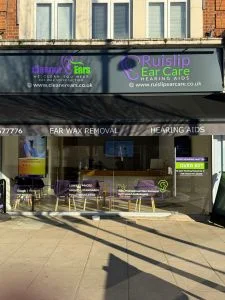
Ruislip Ear Care is our Ruislip clinic, at 103 Victoria Road. These awards were presented to the clinic by SME News and E2 Media — independent recognition of the ear care delivered there.
Visit the Ruislip clinic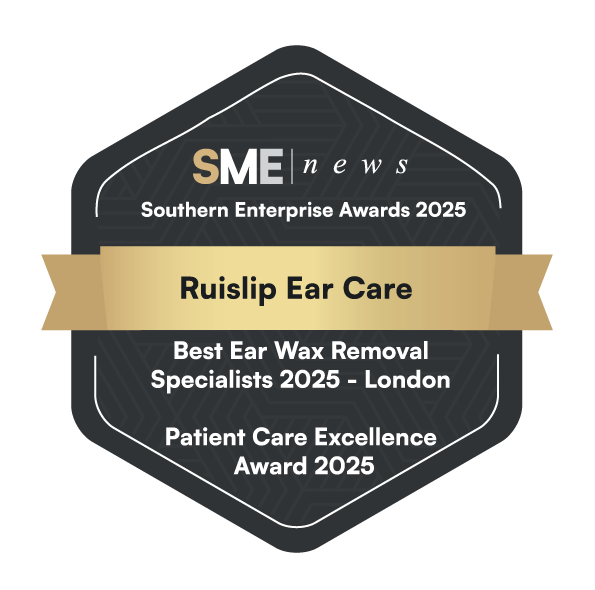
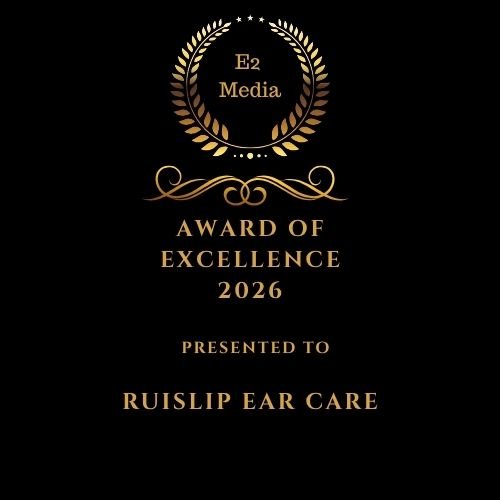

Award details are reproduced as they appear on the plaques presented to Ruislip Ear Care. Awards recognise past work and are not a guarantee of results; suitability for ear wax removal is always assessed at your appointment.
Clear, upfront pricing — amongst the lowest in London for professional ear wax removal. No hidden fees, no surprises. You only pay for the care you need.
Professional ear wax removal for a single ear, with careful assessment first.
Our most popular option — both ears cleared in one calm, unhurried appointment.
Safe, careful removal of a foreign object from the ear canal by qualified staff.
Professional ear wax removal in the comfort of your own home. A fixed price, wherever you are in our visit area.
Should no wax be cleared or found, we only charge a £30 consultation fee to cover professional time. You always know the cost before we begin.
814A Uxbridge Road, Hayes, UB4 0RS
103 Victoria Road, Ruislip, HA4 9BN
Wembley Pharmacy, 183 Ealing Road, Wembley, HA0 4LW
Main clinic: 814A Uxbridge Road, Hayes, UB4 0RS. Appointments across all three locations are booked through the same team.
A plain, step-by-step guide to microsuction — what happens during the procedure, how to prepare, the safety considerations and how to book.
A blocked, full or plugged feeling has many possible causes beyond ear wax. Here are ten worth knowing — and when to seek advice.
Ear wax is normal, but sometimes it builds up and causes problems. Here are ten signs it may be time to seek professional help — and when to act urgently.
Two common ways to clear ear wax, compared plainly — how they work, who each suits, and why an assessment comes before either one.
A clear, honest guide to ear wax removal costs in the UK — what affects the price, what to expect from different providers, and how Cleaner Ears prices its care.
Dizziness and vertigo have many causes. Here is where ear wax fits in, what the inner ear does, and when dizziness needs prompt medical assessment.
Ear wax comes in a range of colours and textures. Here is what is normal, what might affect the colour, and when a change is worth mentioning to a clinician.
Hard, dry ear wax is common and usually normal. Here is what affects its texture, when it causes problems, and how to manage it safely.
Ringing, buzzing or humming in the ears has many possible causes. Here is where ear wax fits in — and when tinnitus needs prompt assessment.
A little preparation can make microsuction smoother and more comfortable. Here is what to do before, on the day, and what to tell your practitioner.
A clear, honest overview of hearing aid costs in the UK — what affects the price, what is available on the NHS, and how to think about value.
Ear wax and hearing aids have a two-way relationship. Here is how wax can affect your aids, how to look after them, and when to seek help.
Most people find microsuction manageable rather than painful. Here is what you actually feel, why some ears are more sensitive, and when discomfort is a sign to stop.
Wondering what to expect?
You’re in good company.
A blocked feeling, muffled hearing or discomfort can sometimes be caused by ear wax, but there can be other causes too. A professional examination helps establish what is happening before any treatment is offered.
We start with a conversation about your symptoms and ear health, then examine your ears. Your practitioner will explain the findings, discuss whether removal is suitable and ask for your consent before proceeding. You can ask questions or stop at any time.
Please ask the team for preparation advice before your visit. Ear drops are not suitable for everyone, particularly if you have a perforated eardrum, an infection or previous ear surgery. Do not start using them without checking if you are unsure.
Not always. We assess your ear health and medical history first. If removal is not appropriate, we explain why and advise on a suitable next step. No procedure is completely risk-free; your practitioner will discuss relevant benefits and risks with you.
Sudden hearing loss, especially in one ear, needs urgent medical assessment — do not assume it is wax. Contact your GP urgently or NHS 111. Severe pain, discharge, bleeding or significant dizziness should also be assessed promptly.
Thorough, honest answers to the questions we hear most — from cost and comfort to microsuction and same-day appointments.
See all FAQsThere is no single “best” way to remove ear wax — the right method depends on your ears, your symptoms and your medical history. The options a qualified ear care professional may use include microsuction (gentle suction under magnification), manual removal with fine instruments, and ear irrigation (flushing the ear with water). Each suits different circumstances, and sometimes no removal is needed at all. What matters most is that your ears are examined first, so the person treating you can see what is actually there and choose a suitable approach. Attempting to remove wax yourself with cotton buds, hairpins or other objects can push wax further in or damage the ear canal and eardrum. The safest way is to have your ears assessed by someone qualified, rather than choosing a method yourself.
At Cleaner Ears our pricing is clear and upfront, with no hidden fees. You only pay for the care you need: • One ear cleared — £35 per ear • Both ears cleared — £49 per visit (our most popular option) • Foreign body cleared — £69 per visit • Home visit — £99 fixed price, within our visit area If no wax is cleared or found, we only charge a £30 consultation fee to cover professional time, and you always know the cost before we begin. Prices are amongst the lowest in London for professional ear wax removal, but the right option for you depends on what we find when we examine your ears. You can see full details on our pricing page.
Most people find ear wax removal manageable rather than painful. Microsuction can feel unusual — you may notice some noise from the suction and a sensation of pressure or suction in the ear. Manual removal and irrigation have their own sensations too. It should not be sharply painful. If anything is uncomfortable, tell your practitioner straight away. You can ask to pause or stop at any time, and your practitioner will check in with you throughout. People with sensitive ears or a history of ear problems sometimes find certain methods more comfortable than others, which is one reason we assess your ears and discuss options with you first rather than using a one-size-fits-all approach.
Appointments are unhurried and include time to talk through your symptoms, examine your ears carefully and carry out any suitable removal. The removal itself is often quick — frequently just a few minutes per ear — but we do not rush the surrounding assessment and conversation, because understanding your ear health first is what keeps the treatment safe and appropriate. You will have space to ask questions before, during and after. If your ears need a little longer, or if softening is advised before a second visit, your practitioner will explain why. The goal is careful, comfortable care, not the fastest possible appointment.
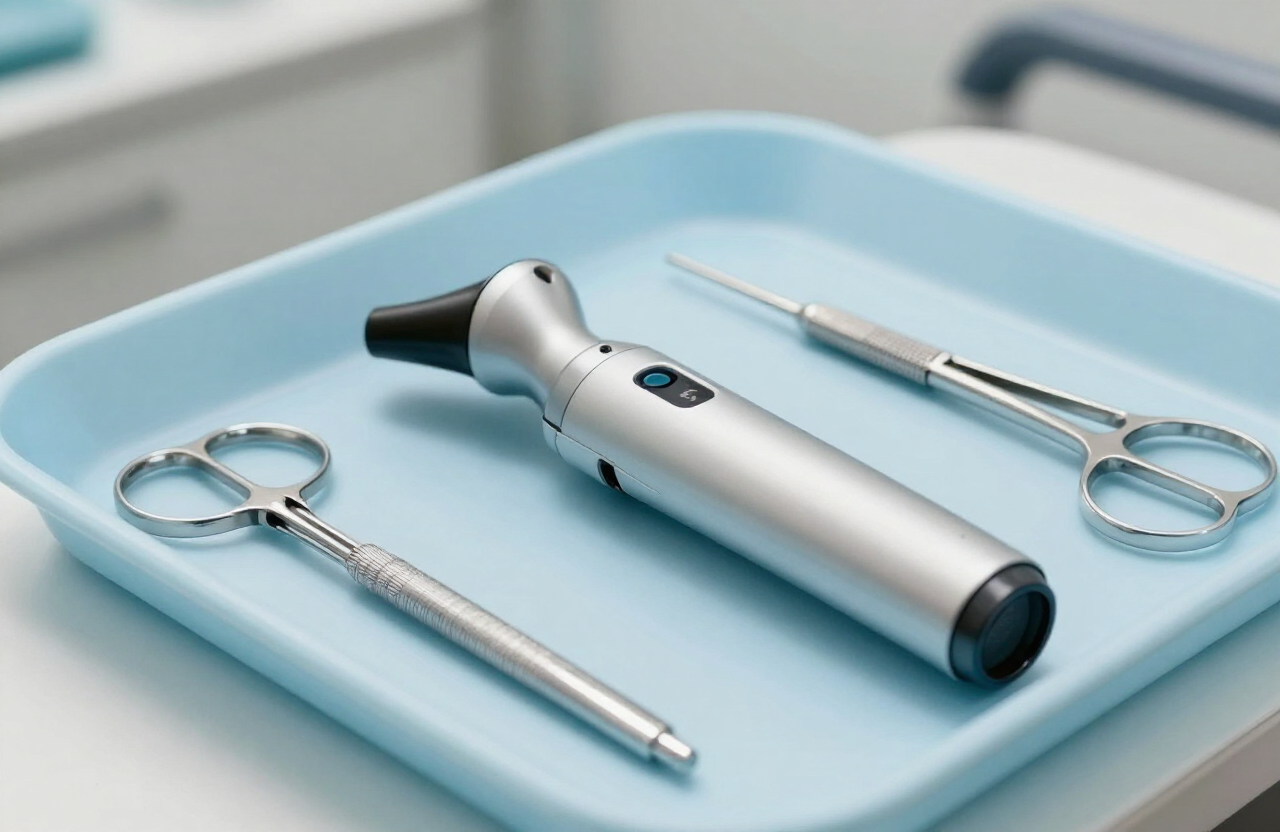
Microsuction is a method of removing ear wax using a small suction device while the practitioner views your ear canal under magnification, usually with a headset or microscope. Because the clinician can see what they are doing throughout, wax can be removed precisely and without introducing water into the ear. It is one of several approaches we may use, alongside manual removal with fine instruments and ear irrigation. Microsuction is often suitable for people who should not have water in the ear — for example after some ear surgery or with a perforated eardrum — but it is not automatically the right choice for everyone. We examine your ears first and discuss whether microsuction is appropriate for you before any treatment begins.
Neither method is simply “better” than the other — each suits different ears and circumstances. Ear irrigation (sometimes called syringing) flushes the ear with water to wash wax out, while microsuction removes wax using gentle suction under direct vision. Microsuction is often preferred where water should be avoided, such as with a perforated eardrum, previous ear surgery, an infection or a narrow ear canal. Irrigation can be effective for softer wax in suitable ears. The right choice depends on what we see when we examine you, your medical history and your comfort. Rather than deciding in advance, we assess your ears and recommend an approach — if any — that is appropriate for you.
Same-day appointments can sometimes be available, particularly at our Ruislip clinic, which is open Monday to Friday 9.30–17.00 and Saturday 9.15–15.00. Our Hayes and Wembley clinics operate by appointment only. Availability depends on how fully the diary is booked, so the sooner you get in touch the better your chance of a convenient slot. The quickest way to check is to book online or message us on WhatsApp. Please remember that same-day care is not guaranteed, and if you have sudden hearing loss (especially in one ear), severe pain, discharge, bleeding or significant dizziness, do not wait for an appointment — contact your GP urgently or call NHS 111, as these symptoms need prompt medical assessment rather than assuming wax is the cause.
FREE GUIDE
Symptoms of hearing loss, why hearing aids matter for a healthy brain, rechargeable and AI hearing aids, and what to expect at your visit.
Download your free brochure → WhatsApp Paul