
Blocked Ears After Flying: Causes and Solutions
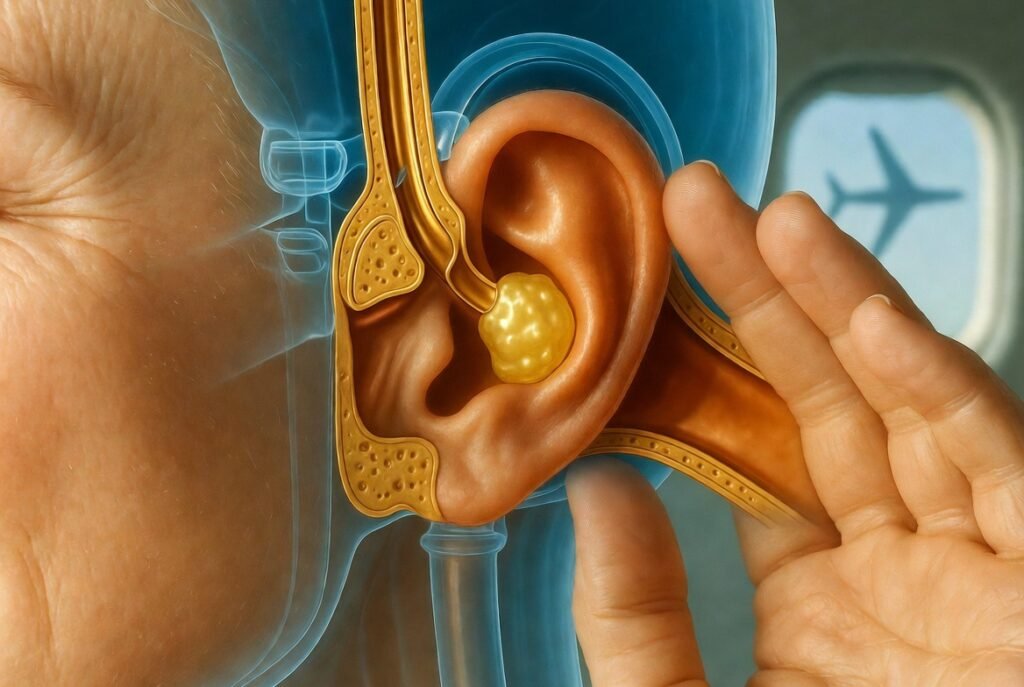
Flying is one of the fastest and most convenient ways to travel, but for many people it comes with an uncomfortable side effect — blocked ears after a flight. Some passengers experience mild pressure that disappears quickly, while others struggle with muffled hearing, pain, dizziness, or a feeling that their ears will not “pop” for hours or even days after landing.
Blocked ears after flying are extremely common and are usually caused by rapid pressure changes inside the cabin during take-off and landing. In most cases the condition is temporary, but for some people it can become painful and frustrating, especially if underlying ear wax build-up, sinus congestion, allergies, or infections are involved.
Understanding why ears become blocked during flights and knowing how to safely treat the problem can help you avoid discomfort and protect your hearing.
Why Do Ears Become Blocked After Flying?
Your ears contain a small passage called the Eustachian tube. This tube connects the middle ear to the back of the nose and throat. Its job is to regulate air pressure inside the ears and keep pressure balanced between the inner ear and the outside environment.
When you fly, cabin pressure changes rapidly, particularly during ascent and descent. The Eustachian tubes must open and close properly to equalise this pressure. If they fail to work effectively, pressure becomes trapped inside the middle ear, creating the sensation of blocked ears.
This condition is often called airplane ear or ear barotrauma.
Common Symptoms of Blocked Ears After Flying
Symptoms can vary from person to person. Some individuals experience only mild discomfort while others may develop severe ear pressure.
Common symptoms include:
- Muffled hearing
- Feeling of fullness in the ears
- Ear popping
- Temporary hearing loss
- Ear pain or discomfort
- Ringing in the ears (tinnitus)
- Dizziness
- Crackling sounds
- Pressure that does not disappear after landing
In more severe cases, people may experience sharp pain or fluid build-up inside the ear.
Why Some People Experience Worse Ear Pressure During Flights
Not everyone experiences blocked ears equally. Several factors can make airplane ear worse.
1. Ear Wax Build-Up
Excess ear wax can partially block the ear canal, making pressure changes feel more intense. When ear wax is already impacting hearing, flying may worsen the sensation of blockage.
People with impacted ear wax often notice:
- Increased muffled hearing after flights
- Difficulty clearing ear pressure
- Temporary hearing reduction
- Increased discomfort during descent
Professional microsuction ear wax removal can help restore normal airflow and improve comfort during flights.
2. Sinus Congestion
Colds, flu, allergies, or sinus infections can inflame the Eustachian tubes, preventing them from opening properly.
When this happens, pressure becomes trapped inside the ear more easily.
Flying with congestion is one of the most common causes of severe airplane ear.
3. Allergies
Hay fever and allergies can cause swelling inside the nose and throat, reducing the ability of the Eustachian tubes to regulate pressure.
People with seasonal allergies often notice worsening ear pressure during flights.
4. Upper Respiratory Infections
Even a mild cold can interfere with ear pressure equalisation.
Many doctors recommend avoiding flights when severely congested because pressure changes may become painful.
5. Anatomical Differences
Some individuals naturally have narrower Eustachian tubes, making them more prone to ear pressure problems.
Children are particularly vulnerable because their Eustachian tubes are smaller and less developed.
What Happens Inside the Ear During a Flight?
During take-off, cabin pressure decreases. Air trapped inside the middle ear expands and usually escapes naturally through the Eustachian tube.
During landing, the opposite happens. Cabin pressure increases rapidly, and the ears must allow air back into the middle ear to equalise pressure.
If the Eustachian tubes cannot open correctly, a vacuum effect develops, causing:
- pressure
- discomfort
- muffled hearing
- pain
This is why most ear discomfort occurs during descent rather than take-off.
How Long Do Blocked Ears Last After Flying?
For many people, symptoms disappear within minutes or hours after landing.
However, some individuals experience symptoms for:
- several hours
- a full day
- multiple days
Persistent blocked ears after flying may indicate:
- impacted ear wax
- sinus inflammation
- Eustachian tube dysfunction
- fluid trapped behind the eardrum
- ear infection
If symptoms last longer than a few days, professional evaluation may be necessary.
Safe and Effective Solutions for Blocked Ears After Flying
Fortunately, several treatments can help relieve pressure safely.
1. Swallowing and Yawning
Swallowing activates the muscles that open the Eustachian tubes.
This helps pressure equalise naturally.
Chewing gum, sipping water, or sucking sweets during descent can significantly reduce discomfort.
Yawning also helps open the tubes and relieve pressure.
2. The Valsalva Maneuver
One of the most common ear pressure treatments is the Valsalva maneuver.
To perform it:
- Close your mouth
- Pinch your nose shut
- Gently blow as if blowing your nose
This can force air into the middle ear and equalise pressure.
However, it should be done gently. Excessive force can damage the ears.
3. Nasal Decongestants
Nasal sprays or decongestants may help reduce swelling around the Eustachian tubes.
These products are often used before flights to improve airflow and pressure equalisation.
They may be especially helpful for people with:
- allergies
- colds
- sinus congestion
Decongestants should be used carefully and according to medical guidance.
4. Warm Compress
Applying a warm cloth over the ears may help improve circulation and reduce discomfort.
Warmth can also help relax surrounding muscles.
5. Stay Hydrated
Dry cabin air can irritate nasal passages and worsen congestion.
Drinking water before and during flights helps keep tissues hydrated and may improve Eustachian tube function.
6. EarPlanes or Pressure-Regulating Earplugs
Special earplugs designed for air travel help slow pressure changes entering the ear canal.
These products can reduce discomfort during ascent and descent.
Many frequent flyers use them successfully.
7. Professional Ear Wax Removal
If impacted ear wax is contributing to blocked ears after flying, professional removal may provide immediate relief.
Microsuction ear wax removal is widely considered one of the safest and most effective methods.
Benefits include:
- improved hearing
- reduced pressure sensation
- clearer ear canals
- safer pressure equalisation during flights
Why Microsuction Is Better for Frequent Flyers
Microsuction uses gentle suction and magnification to safely remove ear wax without pushing it deeper.
Compared to traditional syringing, microsuction is:
- cleaner
- more precise
- safer for sensitive ears
- suitable for people with hearing aids or previous ear problems
Many travellers choose microsuction before holidays or business trips to prevent ear pressure complications.
Can Flying Cause Permanent Ear Damage?
In most cases, blocked ears after flying are temporary.
However, severe pressure changes can occasionally lead to complications such as:
- eardrum injury
- bleeding
- fluid accumulation
- hearing loss
- severe barotrauma
Permanent damage is uncommon but possible if pressure becomes extreme or untreated.
This is why persistent symptoms should not be ignored.
When to Seek Professional Help
You should consider professional ear assessment if you experience:
- severe ear pain
- hearing loss lasting more than a few days
- dizziness
- fluid discharge
- ringing in the ears
- repeated problems after flights
- pressure that will not clear
An ear care specialist can determine whether the issue involves:
- ear wax
- infection
- Eustachian tube dysfunction
- sinus problems
- inflammation
How Ear Wax Can Make Flying More Uncomfortable
Many people are unaware that ear wax contributes significantly to airplane ear symptoms.
When the ear canal is partially blocked with wax:
- sound becomes trapped
- pressure sensations intensify
- hearing becomes muffled more easily
Even small changes in cabin pressure may feel exaggerated.
This is especially common in people who:
- use earbuds frequently
- wear hearing aids
- naturally produce excess wax
- use cotton buds
Why Cotton Buds Make Ear Problems Worse
One of the biggest mistakes people make is trying to clean their ears using cotton buds before travelling.
Cotton buds often:
- push wax deeper
- compact wax against the eardrum
- increase blockage
- worsen hearing problems
Instead of removing wax, they usually make the problem more severe.
Professional cleaning is far safer.
Preventing Blocked Ears on Future Flights
Prevention is often easier than treatment.
Tips to Reduce Ear Pressure During Flights
Before Flying
- Stay hydrated
- Avoid flying with severe congestion
- Use doctor-approved decongestants if necessary
- Consider professional ear wax removal
- Manage allergies properly
During Take-Off and Landing
- Chew gum
- Swallow frequently
- Yawn often
- Use pressure-regulating earplugs
- Stay awake during descent
- Perform gentle pressure equalisation exercises
Children and Blocked Ears During Flights
Children often struggle more with ear pressure changes because their Eustachian tubes are smaller.
Babies and toddlers may become irritable or cry during descent.
Parents can help by encouraging:
- drinking
- swallowing
- sucking on a bottle or dummy
If a child repeatedly struggles with blocked ears after flying, medical advice may be helpful.
Can Ear Infections Develop After Flying?
Pressure imbalance itself does not directly cause infection, but trapped fluid inside the ear can create an environment where infections develop more easily.
Symptoms of infection may include:
- fever
- worsening pain
- discharge
- swelling
- persistent hearing loss
Medical treatment may be required if infection develops.
The Difference Between Airplane Ear and Impacted Ear Wax
Many people confuse these conditions because symptoms overlap.
Airplane Ear
Usually caused by pressure imbalance.
Symptoms include:
- popping
- pressure
- discomfort during flights
Impacted Ear Wax
Caused by wax build-up inside the ear canal.
Symptoms include:
- muffled hearing
- fullness
- blockage
- ringing
Sometimes both conditions occur together.
The Importance of Professional Ear Care
Ear health is often overlooked until symptoms become severe.
Routine ear care can help prevent:
- hearing problems
- discomfort during flights
- pressure build-up
- wax impaction
Professional clinics use specialised equipment to safely assess and treat blocked ears.
Blocked ears after flying are extremely common and are usually caused by pressure changes affecting the Eustachian tubes. While symptoms are often temporary, factors like impacted ear wax, sinus congestion, allergies, and infections can make the condition far worse.
Simple techniques such as swallowing, yawning, staying hydrated, and using pressure-regulating earplugs may help relieve discomfort. However, persistent symptoms should be professionally evaluated, especially if hearing loss or severe pressure continues after travel.
For individuals who frequently experience ear pressure during flights, professional microsuction ear wax removal may significantly improve comfort and hearing while reducing the risk of prolonged blockage.
Healthy ears play an important role in comfortable travel, clear heari