
Why Do Some People Produce More Ear Wax Than Others?
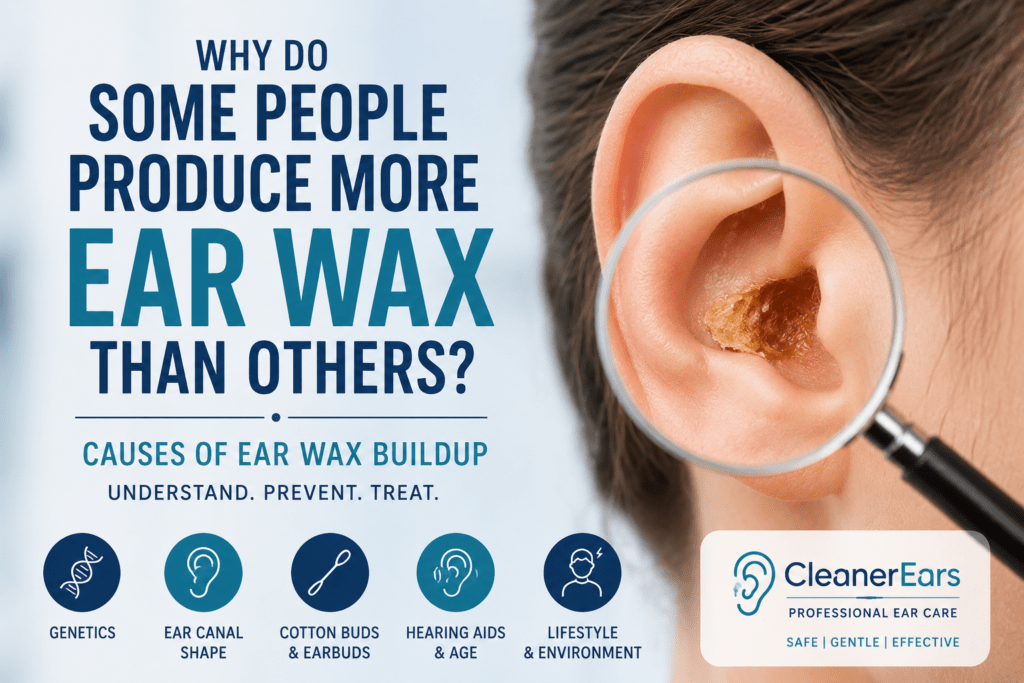
Ear wax is something most people rarely think about until it starts causing problems. For some individuals, ear wax appears to build up quickly no matter how often they clean their ears. Others may hardly notice it at all. This naturally raises the question: why do some people produce more ear wax than others?
Excessive ear wax is actually very common and affects millions of people every year. In many cases, it is harmless and simply part of how the body protects the ears. However, when too much wax builds up, it can lead to blocked ears, discomfort, temporary hearing loss, tinnitus, dizziness, and even ear infections.
Understanding the causes of ear wax buildup can help people manage their ear health more effectively and avoid common mistakes that often make the problem worse.
In this guide, we will explain what ear wax is, why some people naturally produce more of it, the symptoms of excessive wax buildup, and when professional ear wax removal may be necessary.
What Is Ear Wax?
Ear wax, also known medically as cerumen, is a natural substance produced inside the ear canal. It is made by special glands located in the outer part of the ear canal and combines with dead skin cells, hair, and natural oils.
Although many people think ear wax is dirty or unhealthy, it actually plays an important role in protecting the ears.
Ear Wax Helps To:
- Trap dust and dirt before they reach the eardrum
- Prevent bacteria and fungi from growing
- Lubricate the ear canal
- Protect sensitive skin inside the ears
- Reduce irritation caused by water and debris
Without ear wax, the ear canal would become dry, itchy, and more vulnerable to infection.
Normally, the ears are self-cleaning. Jaw movements from talking and chewing gradually move old wax toward the outer ear where it naturally falls out or can be gently wiped away.
Problems occur when too much wax is produced or when the wax cannot exit the ear canal properly.
Why Do Some People Produce Excessive Ear Wax?
There is no single reason why some people experience excessive ear wax buildup. In most cases, it is caused by a combination of genetics, lifestyle habits, ear shape, age, and environmental factors.
Some people simply produce more wax naturally than others.
Below are the most common causes of excessive ear wax.
Genetics and Natural Ear Wax Production
One of the biggest factors influencing ear wax production is genetics.
Just like people inherit hair colour or eye colour, they also inherit the way their body produces ear wax.
Some individuals naturally have:
- More active wax glands
- Narrower ear canals
- Stickier ear wax consistency
- Faster wax production
These traits can make certain people more likely to experience blocked ears and impacted wax throughout their lives.
Interestingly, ear wax types can vary between populations. Some people produce wet, sticky wax while others produce dry, flaky wax. Wet wax tends to build up more easily and is more likely to cause blockages.
If your parents struggled with excessive ear wax, there is a good chance you may experience similar problems.
Narrow or Curved Ear Canals
The shape and size of the ear canal can significantly affect how ear wax exits the ear.
Some people naturally have:
- Very narrow ear canals
- Curved ear canals
- Hairy ear canals
- Small openings
These features can trap wax inside the ear more easily and prevent the ear’s natural cleaning process from working efficiently.
Even normal amounts of wax may become impacted when the ear canal is too narrow for wax to move outward properly.
This is one reason why some individuals experience repeated ear blockages despite maintaining good hygiene.
Age and Ear Wax Build-Up
Age is another major factor linked to ear wax buildup.
As people get older:
- Ear wax often becomes drier and harder
- The natural migration process slows down
- Ear canal hairs may become thicker
- Skin inside the ears changes
These changes make it easier for wax to become stuck inside the ear canal.
Older adults are therefore more likely to experience impacted ear wax and hearing difficulties caused by blockages.
Excessive ear wax is especially common in elderly hearing aid users because hearing aids can also interfere with natural wax removal.
Using Cotton Buds Makes Wax Worse
One of the biggest misconceptions about ear care is that cotton buds help clean the ears.
In reality, cotton buds are one of the leading causes of impacted ear wax.
Instead of removing wax, cotton buds often push it deeper into the ear canal where it becomes compacted near the eardrum.
Repeated use of cotton buds can cause:
- Hard wax blockages
- Ear canal irritation
- Infections
- Damage to the ear canal
- Temporary hearing loss
Many people who suffer from excessive ear wax unknowingly worsen the problem by trying to clean their ears too frequently.
Most healthcare professionals recommend avoiding cotton buds completely.
Earbuds and Headphones Can Contribute to Wax Build-Up
Modern lifestyles have also increased ear wax problems.
Frequent use of:
- Earbuds
- In-ear headphones
- Ear plugs
- Noise-cancelling devices
can block the natural movement of wax out of the ear canal.
These devices may also push wax deeper into the ears over time.
Additionally, wearing earbuds for long periods can increase warmth and moisture inside the ear canal, creating an environment where wax becomes softer and more compacted.
People who use earbuds daily often experience recurring blocked ears.
Hearing Aids and Excessive Ear Wax
Hearing aids are another common cause of wax buildup.
Hearing aids partially block the ear canal, which can:
- Prevent wax from naturally exiting
- Stimulate increased wax production
- Push wax deeper into the ear
Even small amounts of wax can interfere with hearing aid performance and reduce sound quality.
For this reason, hearing aid users are often advised to have their ears checked regularly for wax buildup.
Professional ear cleaning can help improve hearing aid effectiveness and comfort.
Stress and Skin Conditions
Certain health conditions may also increase ear wax production.
Skin conditions such as:
- Eczema
- Psoriasis
- Dermatitis
can affect the ear canal and lead to abnormal wax production.
Stress and anxiety may also contribute indirectly by increasing inflammation or causing people to clean their ears excessively.
Although stress itself does not directly create more wax, it can worsen behaviours that contribute to ear problems.
Environmental Factors
People exposed to dusty or dirty environments may produce more ear wax because the ears attempt to protect themselves from debris.
This includes people who work in:
- Construction
- Warehouses
- Manufacturing
- Outdoor labour
- Dusty environments
The ear naturally increases wax production to trap dirt and prevent particles from reaching deeper parts of the ear.
Swimming frequently may also affect wax by causing it to swell and become trapped.
Symptoms of Excessive Ear Wax
Many people do not realise they have excessive ear wax until symptoms begin to interfere with daily life.
Common symptoms include:
Blocked Ears
The most common sign of impacted wax is a feeling of fullness or blockage inside the ear.
Many people describe it as:
- Feeling underwater
- Muffled hearing
- Pressure inside the ear
Temporary Hearing Loss
When wax blocks the ear canal, sound cannot travel properly to the eardrum.
This may lead to:
- Reduced hearing
- Difficulty understanding conversations
- Needing to increase TV volume
Hearing usually improves immediately after wax removal.
Tinnitus
Some people experience ringing, buzzing, or humming sounds caused by wax pressing against the eardrum.
This is known as tinnitus.
Wax-related tinnitus often improves after the blockage is removed.
Ear Pain or Discomfort
Hard wax can press against sensitive parts of the ear canal and cause discomfort or aching.
Pain may become worse when chewing or lying down.
Dizziness
In severe cases, impacted wax may affect balance and cause dizziness or vertigo-like sensations.
Itching
Excessive wax or dry wax can irritate the skin inside the ear canal and cause persistent itching.
Why Ear Wax Should Not Always Be Removed
It is important to remember that ear wax itself is not harmful.
The ears naturally need some wax for protection.
Trying to completely remove all ear wax can actually create more problems by:
- Drying out the ear canal
- Increasing irritation
- Triggering infections
- Stimulating more wax production
Ear wax only needs treatment when it becomes impacted or causes symptoms.
Safe Ways to Manage Ear Wax at Home
If symptoms are mild, there are safer ways to soften wax without damaging the ears.
Olive Oil Ear Drops
Medical-grade olive oil drops can help soften hardened wax naturally.
A few drops placed into the ear for several days may help wax move out on its own.
Avoid Inserting Objects Into the Ear
Never place the following into the ear canal:
- Cotton buds
- Hairpins
- Keys
- Fingers
- Ear candles
These objects can push wax deeper and injure the ear.
Keep Earbuds Clean
Dirty earbuds can introduce bacteria and worsen irritation.
Cleaning earbuds regularly may help reduce problems.
When Should You Seek Professional Ear Wax Removal?
Professional treatment may be needed if symptoms persist despite using ear drops.
You should seek professional help if you experience:
- Ongoing blocked ears
- Sudden hearing loss
- Pain
- Dizziness
- Tinnitus
- Recurrent wax buildup
- Difficulty using hearing aids
Professional ear wax removal is usually quick, safe, and highly effective.
Microsuction Ear Wax Removal
Microsuction is now considered one of the safest and most effective methods for removing impacted ear wax.
During microsuction:
- A clinician uses a microscope or magnification device
- A gentle suction device removes wax safely
- Water is not forced into the ear
- The procedure is usually quick and comfortable
Microsuction is preferred by many clinics because it provides clear visibility and reduces risks associated with traditional syringing.
Many patients notice immediate hearing improvement after treatment.
Why Some People Need Regular Ear Cleaning
Certain individuals naturally require more frequent ear wax removal than others.
This may include:
- Hearing aid users
- Elderly individuals
- People with narrow ear canals
- Earbud users
- Individuals with naturally excessive wax production
Some people may benefit from routine ear checks every few months to prevent severe blockages from developing.
Can Diet Affect Ear Wax?
There is limited scientific evidence directly linking diet to ear wax production.
However, hydration and overall skin health may influence wax consistency.
Healthy habits that may support ear health include:
- Staying hydrated
- Eating balanced foods
- Avoiding smoking
- Managing allergies and skin conditions
The Biggest Mistake People Make With Ear Wax
The biggest mistake many people make is over-cleaning their ears.
The ears are designed to clean themselves naturally.
Attempting to remove wax daily often creates a cycle of irritation and blockage.
In many cases, leaving the ears alone is the healthiest option.
Excessive ear wax is a very common problem and can affect people of all ages. While some individuals naturally produce more wax due to genetics or ear shape, modern habits like using cotton buds and earbuds can also contribute to ear wax buildup.
Although ear wax plays an important protective role, too much of it can cause blocked ears, hearing difficulties, tinnitus, dizziness, and discomfort.
Understanding the causes of ear wax buildup can help people manage their ear health more safely and avoid damaging cleaning methods.
If symptoms persist or become uncomfortable, professional ear wax removal such as microsuction can provide fast and effective relief.
For most people, the key to healthy ears is simple: avoid over-cleaning, never insert objects into the ear canal, and seek professional advice when needed.