
Microsuction vs Ear Syringing: Which Is Better?
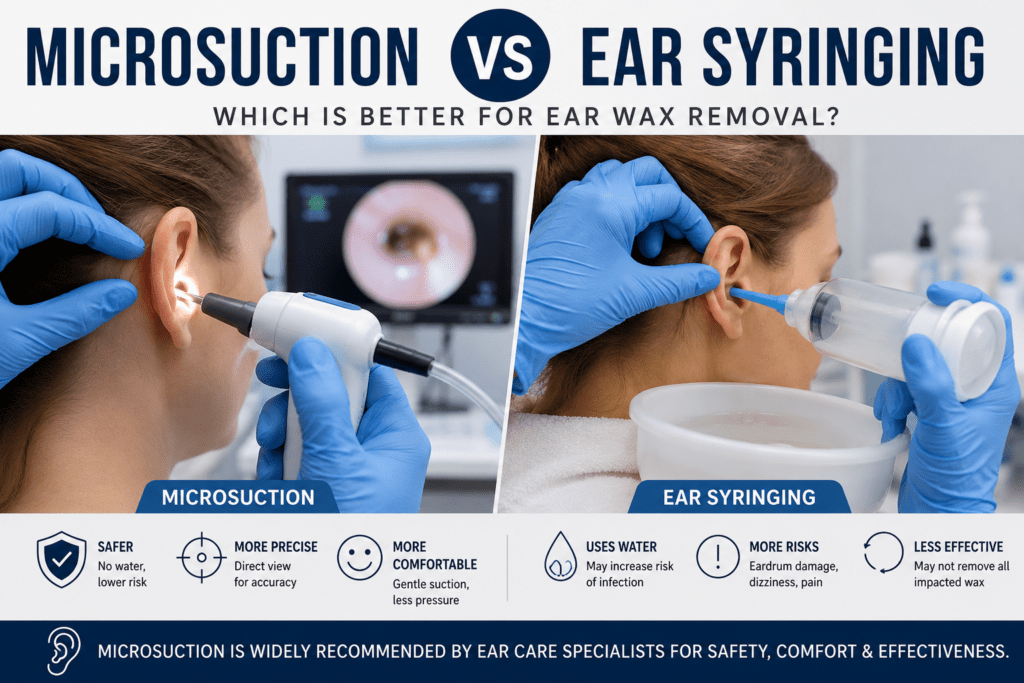
Ear wax removal has become one of the most searched ear care treatments in recent years, especially as more people experience blocked ears, muffled hearing, tinnitus, dizziness, and discomfort caused by impacted wax. Two of the most common professional treatments available today are microsuction and ear syringing.
Many patients searching for professional ear cleaning often ask the same important question: Which method is better — microsuction or ear syringing?
Both treatments are designed to remove built-up ear wax safely, but they work very differently. Over the last few years, many ear care clinics, audiologists, and ENT specialists have increasingly moved toward microsuction because of its safety, precision, and effectiveness.
In this detailed guide, we will compare microsuction and ear syringing, including:
- How each treatment works
- Safety differences
- Comfort levels
- Effectiveness
- Risks and side effects
- Suitability for different patients
- Why many clinics now prefer microsuction
By the end of this article, you will understand which treatment may be the better option for your ears.
What Is Ear Wax?
Ear wax, also known medically as cerumen, is a natural substance produced by glands inside the ear canal. Although many people think ear wax is dirty or unhealthy, it actually plays an important protective role.
Ear wax helps:
- Trap dust and debris
- Protect the ear canal from bacteria
- Prevent infections
- Lubricate the ear canal
- Stop insects and foreign particles from entering the ear
Normally, ear wax moves out of the ear naturally through jaw movement such as talking and chewing. However, some people produce excessive ear wax, while others may develop impacted wax that becomes trapped deep inside the ear canal.
This can lead to symptoms such as:
- Blocked ears
- Hearing loss
- Ear discomfort
- Ringing in the ears (tinnitus)
- Dizziness
- Earache
- Pressure in the ears
When this happens, professional ear wax removal may be necessary.
What Is Ear Syringing?
Ear syringing is one of the older methods of ear wax removal. It involves flushing warm water into the ear canal using pressure to remove wax build-up.
Traditionally, a syringe was used manually, although many clinics later switched to electronic irrigation devices that provide controlled water flow.
During ear syringing:
- Warm water is directed into the ear canal
- Water pressure loosens and dislodges wax
- The wax is flushed out of the ear
Patients are often advised to soften the wax beforehand using olive oil or ear drops for several days before the procedure.
What Is Microsuction?
Microsuction is a modern ear wax removal technique that uses a small medical suction device to gently remove wax from the ear canal.
The procedure is performed while the clinician looks directly into the ear using magnification equipment or a microscope. This allows precise and controlled removal of ear wax.
During microsuction:
- The clinician examines the ear canal
- A fine suction tube is inserted carefully
- Wax is gently suctioned out
- The ear canal is cleaned under direct vision
Microsuction is commonly performed by:
- ENT specialists
- Audiologists
- Ear care practitioners
- Specialist ear clinics
Many clinics now consider microsuction the gold standard for ear wax removal.
Safety Comparison: Microsuction vs Ear Syringing
Safety is one of the biggest reasons many clinics prefer microsuction over ear syringing.
Microsuction Safety
Microsuction is generally considered very safe because:
- The clinician can see inside the ear throughout the procedure
- No water is used
- Suction is controlled and precise
- The risk of infection is lower
- The risk of damaging the eardrum is reduced
Microsuction is especially useful for patients with:
- Perforated eardrums
- Previous ear surgery
- Ear infections
- Narrow ear canals
- Hearing aids
- Sensitive ears
Because the procedure is performed under direct vision, clinicians can work carefully and stop immediately if needed.
Ear Syringing Safety
Ear syringing can still be effective in some cases, but it carries more risks compared to microsuction.
Potential risks include:
- Ear infections
- Damage to the eardrum
- Dizziness
- Pain or discomfort
- Water trapped inside the ear
- Worsening of existing ear conditions
Because water pressure is used, the clinician cannot always fully control how the wax moves inside the ear canal.
For this reason, many GP surgeries and clinics have reduced or stopped offering ear syringing altogether.
Comfort Comparison
Many patients worry about whether ear wax removal will hurt.
Is Microsuction Comfortable?
Most patients find microsuction comfortable and quick. Some people may experience:
- A suction noise
- Mild sensitivity
- Tickling sensations
- Temporary dizziness
However, the procedure is usually well tolerated and does not involve water pressure.
Because the clinician can see the wax directly, removal is often gentler and more controlled.
Is Ear Syringing Comfortable?
Ear syringing may feel uncomfortable for some patients because of the water pressure inside the ear canal.
Some people report:
- Pressure sensations
- Sudden dizziness
- Water discomfort
- Temporary imbalance
- Ear fullness
If the water temperature is too hot or too cold, dizziness can become more noticeable.
Which Method Is More Effective?
Microsuction Effectiveness
Microsuction is highly effective because it allows precise removal of wax under direct visualization.
Benefits include:
- Accurate wax removal
- Immediate results
- Better removal of stubborn wax
- Reduced need for repeat appointments
- Suitable for difficult cases
Even hard or deep wax can often be removed successfully.
Ear Syringing Effectiveness
Ear syringing can still remove wax effectively in certain cases, especially when the wax is soft.
However, effectiveness may be reduced when:
- Wax is deeply impacted
- Wax is very hard
- The ear canal is narrow
- Water cannot reach the blockage properly
Sometimes syringing only partially removes the wax, requiring repeat treatment.
Why Many Clinics Prefer Microsuction
Over recent years, many clinics have transitioned away from syringing and toward microsuction.
There are several reasons for this shift.
1. Better Safety Profile
Microsuction avoids many of the risks associated with water irrigation.
2. No Water Used
Water-based procedures can increase infection risk and discomfort.
Microsuction keeps the ear dry throughout the process.
3. More Precision
Clinicians can see exactly what they are doing during microsuction.
4. Suitable for More Patients
Microsuction is often safer for people with:
- Ear surgery history
- Perforated eardrums
- Recurring infections
- Hearing aids
- Tinnitus
5. Faster Treatment
Many microsuction appointments are completed within 15–30 minutes.
6. Better Patient Experience
Patients often report greater comfort and confidence with microsuction.
Risks and Side Effects of Microsuction
Although microsuction is considered safe, mild side effects can occasionally occur.
These may include:
- Temporary dizziness
- Mild sensitivity
- Temporary ringing in the ears
- Cough reflex (rare)
- Slight irritation
Serious complications are uncommon when performed by trained professionals.
Risks and Side Effects of Ear Syringing
Ear syringing carries a slightly higher complication risk.
Possible side effects include:
- Ear infections
- Eardrum perforation
- Pain
- Vertigo
- Water retention
- Ear canal trauma
Because of these risks, some healthcare providers no longer recommend routine syringing.
Which Ear Wax Removal Method Is Better for Tinnitus?
Blocked ears caused by impacted wax can sometimes contribute to tinnitus symptoms.
Microsuction is often preferred for tinnitus sufferers because:
- It is quieter than irrigation equipment
- It avoids water pressure
- It allows gentle wax removal
- It reduces the risk of worsening symptoms
However, some people may temporarily notice increased sound sensitivity immediately after wax removal due to improved hearing.
Microsuction for Hearing Aid Users
Hearing aid users commonly experience ear wax build-up because hearing aids can interfere with the ear’s natural cleaning process.
Microsuction is particularly suitable because:
- It is precise
- It avoids moisture near hearing devices
- It reduces infection risk
- It works well in narrow canals
Many hearing clinics recommend routine microsuction maintenance for hearing aid users.
Can Children Have Microsuction?
Yes, children can have microsuction performed by trained professionals.
Microsuction may be preferable for children because:
- It is quick
- It avoids water pressure
- It can be gentler
- It provides better visibility for the clinician
However, younger children may still find it difficult to sit still during the procedure.
Do You Need Ear Drops Before Microsuction?
Some clinics recommend olive oil drops for a few days before microsuction to soften hard wax.
Softening the wax may:
- Make removal easier
- Reduce sensitivity
- Shorten treatment time
However, not all patients require pre-treatment drops.
How Long Does Microsuction Take?
Most microsuction appointments take between 15 and 30 minutes.
The exact time depends on:
- Wax severity
- Ear canal shape
- Wax hardness
- Patient sensitivity
Many patients notice immediate hearing improvement after treatment.
Can You Remove Ear Wax at Home?
While some mild wax build-up may clear naturally, home removal methods can sometimes make the problem worse.
Avoid:
- Cotton buds
- Hairpins
- Ear candles
- Sharp objects
These methods may push wax deeper or damage the ear canal.
If symptoms persist, professional ear cleaning is usually the safest option.
Signs You Should Seek Professional Ear Wax Removal
You should consider professional ear wax removal if you experience:
- Persistent blocked ears
- Hearing loss
- Ear pressure
- Tinnitus
- Dizziness
- Ear discomfort
- Wax visible in the ear canal
- Difficulty using hearing aids
Ignoring impacted wax may increase the risk of infection or worsening symptoms.
Who Should Avoid Ear Syringing?
Ear syringing may not be suitable for patients with:
- Perforated eardrums
- Ear infections
- Previous ear surgery
- Grommets
- Severe tinnitus
- Balance disorders
Microsuction is often the safer alternative in these cases.
Final Verdict: Microsuction vs Ear Syringing
When comparing microsuction and ear syringing, microsuction is now widely regarded as the safer, cleaner, and more precise method of ear wax removal.
While syringing can still work for some patients, microsuction offers several major advantages:
- Better safety
- Greater precision
- No water-related risks
- Improved comfort
- Faster treatment
- Lower infection risk
This is why many modern ear care clinics, audiologists, and ENT specialists now prefer microsuction over traditional syringing.
If you are struggling with blocked ears, hearing loss, or impacted wax, professional microsuction treatment may provide fast and effective relief.
Frequently Asked Questions
Is microsuction safer than ear syringing?
Yes. Microsuction is generally considered safer because it avoids water pressure and allows direct visualization inside the ear.
Does microsuction hurt?
Most patients find microsuction comfortable, although some may experience mild sensitivity or temporary dizziness.
Why are clinics stopping ear syringing?
Many clinics are moving away from syringing because microsuction offers better safety and fewer complications.
Can microsuction damage hearing?
When performed correctly by a trained professional, microsuction is very unlikely to damage hearing.
How often should ear wax be removed?
This varies between individuals. Some people may need treatment every few months, while others rarely require professional cleaning.