
The Dangers of Using Cotton Buds in Your Ears
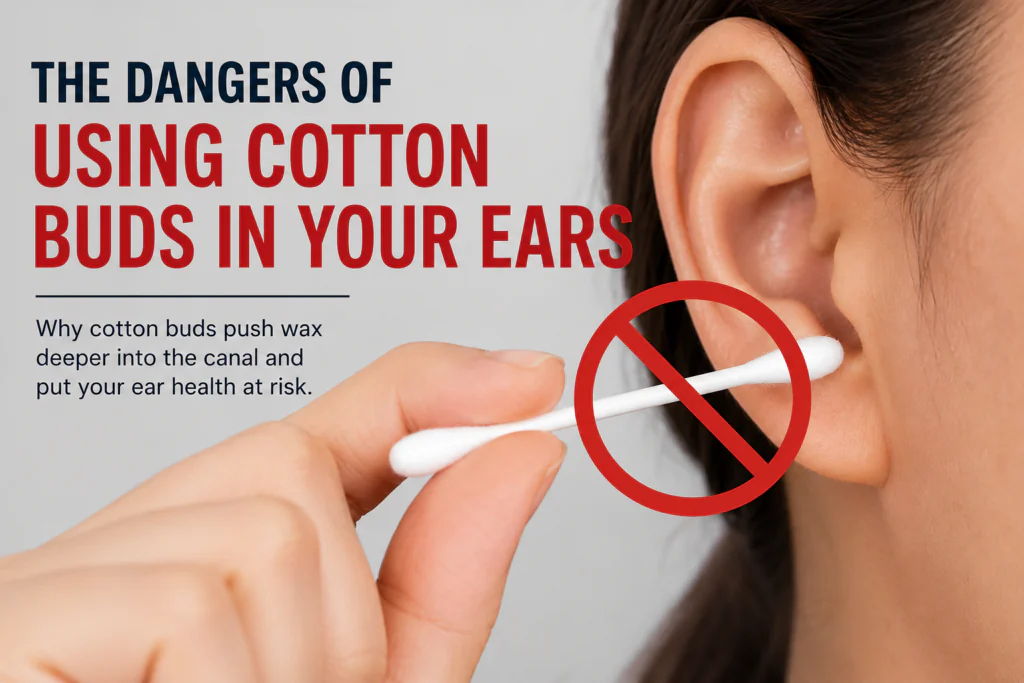
For many people, using cotton buds to clean their ears has become part of their daily hygiene routine. After a shower or bath, countless individuals reach for cotton buds believing they are helping keep their ears clean and healthy. However, medical professionals consistently warn against placing cotton buds inside the ear canal because they can cause far more harm than good.
Although cotton buds may seem harmless, they are one of the most common causes of impacted ear wax and ear canal injuries. Instead of removing ear wax properly, cotton buds often push the wax deeper into the ear canal where it becomes compacted. Over time, this can lead to blocked ears, hearing difficulties, infections, dizziness, tinnitus, and even damage to the eardrum.
Many people only realise the dangers of cotton buds after experiencing discomfort or temporary hearing loss. Unfortunately, by the time symptoms appear, the wax may already be severely impacted and require professional ear wax removal.
Understanding why cotton buds are dangerous is important for protecting your hearing and maintaining healthy ears. In this article, we will explain why ear wax exists, how cotton buds affect the ear canal, the risks involved, and the safest ways to manage ear wax build-up.
Understanding the Purpose of Ear Wax
Before discussing the dangers of cotton buds, it is important to understand that ear wax is not dirty or harmful. Ear wax, also known as cerumen, is a natural substance produced by glands inside the ear canal.
Many people assume ear wax should always be removed, but it actually serves several important functions.
Ear Wax Protects the Ear Canal
Ear wax acts as a protective barrier that traps:
- Dust
- Dirt
- Bacteria
- Dead skin cells
- Small particles
This prevents harmful substances from reaching the delicate inner structures of the ear.
Ear wax also helps lubricate the ear canal, preventing dryness and irritation. Additionally, it has antibacterial and antifungal properties that help reduce the risk of infections.
The Ear Cleans Itself Naturally
One of the most fascinating things about the human ear is that it is self-cleaning.
As we talk, chew, and move our jaws, old ear wax naturally migrates outward toward the opening of the ear canal. Once it reaches the outer ear, it dries up and falls away naturally.
In most cases, the ears do not require internal cleaning at all.
Problems usually occur when something interferes with the ear’s natural cleaning process. This includes:
- Using cotton buds
- Wearing hearing aids
- Frequent earphone use
- Producing excessive wax
- Having narrow ear canals
Cotton buds are particularly problematic because they interrupt the natural movement of wax.
Why People Use Cotton Buds
Despite medical advice, millions of people continue to use cotton buds inside their ears every day.
Some people use them because:
- They believe ear wax is dirty
- Their ears feel itchy
- They enjoy the sensation of cleaning
- They want to remove moisture after bathing
- They think cotton buds improve hygiene
The problem is that cotton buds create a false sense of cleanliness while actually increasing the risk of ear problems.
Many people are surprised to learn that most cotton bud packaging includes warnings advising users not to insert them into the ear canal.
How Cotton Buds Push Wax Deeper Into the Ear Canal
The biggest problem with cotton buds is that they rarely remove wax effectively.
Instead of pulling wax out, cotton buds usually push the wax deeper into the ear canal. This creates a compaction effect where wax becomes tightly packed near the eardrum.
Imagine pushing mud deeper into a narrow pipe using a stick. The more you push, the tighter the blockage becomes.
This is exactly what happens inside the ear canal.
The Ear Canal Is Extremely Narrow
The ear canal is a delicate and narrow structure. When a cotton bud is inserted, it pushes against soft wax and forces it deeper into tighter sections of the canal.
Over time, repeated use compresses the wax into a hard blockage known as impacted ear wax.
Once the wax becomes impacted, it can be very difficult to remove naturally.
Symptoms of Impacted Ear Wax
When wax becomes compacted deep inside the ear canal, symptoms often begin to develop.
Common symptoms include:
- Blocked ears
- Muffled hearing
- Ear pressure
- Ear pain
- Ringing in the ears
- Dizziness
- Itching
- Discomfort
- Temporary hearing loss
Unfortunately, many people continue using cotton buds when these symptoms appear, believing more cleaning will solve the problem. In reality, this often pushes the wax even deeper.
The Most Common Dangers of Using Cotton Buds
1. Impacted Ear Wax
Impacted ear wax is one of the most common complications caused by cotton buds.
This happens when wax becomes compressed deep inside the ear canal and blocks sound from reaching the eardrum properly.
Impacted wax can affect daily life by making conversations difficult to hear and causing ongoing discomfort.
Many patients experience immediate relief once the blockage is professionally removed.
2. Temporary Hearing Loss
When wax blocks the ear canal, sound waves cannot travel effectively to the eardrum.
This often causes temporary hearing loss or muffled hearing.
Some people become extremely worried when their hearing suddenly decreases after using cotton buds.
Fortunately, hearing often improves quickly after safe wax removal.
3. Ear Canal Injuries
The skin inside the ear canal is extremely thin and sensitive.
Cotton buds can easily scratch or irritate this delicate tissue.
Small injuries inside the ear may cause:
- Pain
- Bleeding
- Sensitivity
- Swelling
- Irritation
Even minor scratches can become infected if bacteria enter the damaged skin.
4. Ear Infections
Repeated irritation from cotton buds increases the risk of infections.
Cotton buds can damage the protective layer inside the ear canal, allowing bacteria and fungi to grow more easily.
Symptoms of an ear infection may include:
- Pain
- Redness
- Swelling
- Discharge
- Fever
- Increased sensitivity
Some infections can become severe if left untreated.
5. Perforated Eardrum
One of the most serious risks of using cotton buds is puncturing the eardrum.
The eardrum is a thin membrane located deep inside the ear canal. It plays a vital role in hearing by vibrating in response to sound.
If a cotton bud is inserted too deeply, it can accidentally perforate the eardrum.
This may result in:
- Severe pain
- Sudden hearing loss
- Dizziness
- Ringing in the ears
- Bleeding
In severe cases, surgery may be required to repair the damage.
6. Tinnitus
Tinnitus refers to ringing, buzzing, or humming sounds in the ears.
Impacted ear wax caused by cotton buds can contribute to tinnitus symptoms.
Some people notice the ringing becomes worse when their ears feel blocked.
Removing impacted wax safely may help reduce tinnitus related to wax build-up.
7. Dizziness and Balance Problems
The ears play an important role in maintaining balance.
Pressure caused by impacted wax can sometimes affect balance and cause dizziness or lightheadedness.
Patients with severe blockages occasionally report feeling unsteady while walking or moving their heads.
Why Cotton Buds Feel Satisfying
Many people continue using cotton buds because the sensation feels satisfying.
This temporary feeling can be misleading.
Cotton buds may stimulate sensitive nerve endings inside the ear canal, creating a pleasurable sensation. However, repeated stimulation can increase irritation and inflammation over time.
What feels good momentarily may actually be causing long-term damage.
Who Is Most at Risk?
Certain individuals are more likely to experience complications from cotton bud use.
Hearing Aid Users
Hearing aids can interfere with the natural movement of ear wax.
Using cotton buds alongside hearing aids often worsens wax build-up and increases the risk of blockages.
Frequent Earphone Users
Earbuds and headphones can trap wax inside the ear canal.
When combined with cotton bud use, the risk of impacted wax becomes much higher.
Elderly Individuals
As people age, ear wax often becomes harder and drier.
Cotton buds can compact this hardened wax more easily.
People With Narrow Ear Canals
Some people naturally have narrow ear canals, making them more prone to blockages.
Even small amounts of compressed wax can cause significant symptoms.
Signs You Should Stop Using Cotton Buds
If you experience any of the following symptoms, you should stop using cotton buds immediately:
- Blocked ears
- Muffled hearing
- Ear pain
- Ringing sounds
- Dizziness
- Bleeding
- Ear discharge
- Persistent itching
- Ear sensitivity
Seeking professional advice early can help prevent complications from becoming worse.
Safe Alternatives to Cotton Buds
The good news is that there are safer ways to care for your ears.
Allow Your Ears to Clean Naturally
In many cases, the best option is simply to leave your ears alone.
Healthy ears usually clean themselves without needing manual wax removal.
Use Ear Wax Softening Drops
Softening drops may help loosen hard wax naturally.
Common options include:
- Olive oil drops
- Sodium bicarbonate drops
- Pharmacy ear wax softeners
However, ear drops should not be used if you have a perforated eardrum or active ear infection unless advised by a healthcare professional.
Professional Microsuction Ear Wax Removal
Microsuction is widely considered one of the safest and most effective methods for removing ear wax.
During microsuction, a trained clinician uses:
- Magnification equipment
- A gentle suction device
- Specialist precision tools
The wax is removed safely under direct vision without pushing it deeper into the ear canal.
Benefits of Microsuction
- Safe and precise
- Quick procedure
- Immediate hearing improvement
- No water involved
- Reduced infection risk
- Suitable for sensitive ears
Many modern ear clinics now prefer microsuction over traditional syringing methods.
Why Professional Ear Cleaning Is Safer
Professional ear care specialists understand the delicate anatomy of the ear.
They use specialised medical equipment designed specifically for safe wax removal.
Attempting to remove deep wax at home using cotton buds or sharp objects greatly increases the risk of injury.
Professional treatment ensures:
- Safe wax removal
- Proper ear examination
- Reduced risk of damage
- Early detection of infections or abnormalities
Myths About Cotton Buds
Myth 1: Cotton Buds Clean the Ear
Reality: Cotton buds mainly push wax deeper into the ear canal.
Myth 2: Ear Wax Is Dirty
Reality: Ear wax protects and lubricates the ears.
Myth 3: You Should Remove Ear Wax Frequently
Reality: Most ears naturally remove excess wax on their own.
Myth 4: Cotton Buds Are Safe If Used Carefully
Reality: Even careful use can compact wax and damage sensitive tissue.
How Ear Clinics Treat Impacted Ear Wax
When patients visit an ear clinic, clinicians typically:
- Examine the ear canal
- Identify wax build-up
- Check for infections or inflammation
- Remove wax safely using microsuction
- Provide aftercare advice
Many patients experience immediate improvement in hearing and comfort after treatment.
Preventing Future Ear Wax Problems
Preventing wax build-up often involves simple lifestyle changes.
Avoid Inserting Objects Into Your Ears
Never place objects inside the ear canal, including:
- Cotton buds
- Hairpins
- Fingers
- Pens
- Ear candles
If an object can fit inside your ear canal, it can potentially cause harm.
Use Earphones Responsibly
Taking breaks from earbuds and cleaning them regularly may help reduce wax accumulation.
Seek Professional Help Early
If your ears feel blocked, avoid aggressive cleaning at home.
Early professional treatment can prevent more serious complications.
The Growing Popularity of Microsuction Ear Wax Removal
More patients are now choosing microsuction because it is modern, safe, and highly effective.
Unlike traditional ear syringing, microsuction does not rely on flushing water into the ear canal. This makes it more comfortable for many patients and reduces the risk of infections.
Clinics offering microsuction often help patients suffering from:
- Impacted ear wax
- Hearing loss
- Blocked ears
- Tinnitus
- Ear discomfort
The treatment is usually quick, with many appointments completed within minutes.
Although cotton buds may seem harmless, they can cause serious problems when inserted into the ears. Instead of cleaning the ear canal, cotton buds often push wax deeper inside, leading to impacted wax, infections, hearing problems, and even eardrum injuries.
The ears are naturally self-cleaning, and in most cases, internal cleaning is unnecessary. If ear wax becomes problematic, professional ear wax removal methods such as microsuction provide a much safer solution.
Protecting your hearing starts with avoiding harmful habits. By understanding the dangers of cotton buds and choosing safer ear care methods, you can keep your ears healthy and reduce the risk of painful complications in the future.